

Why Did the Makkah Alliance Go to Tehran?
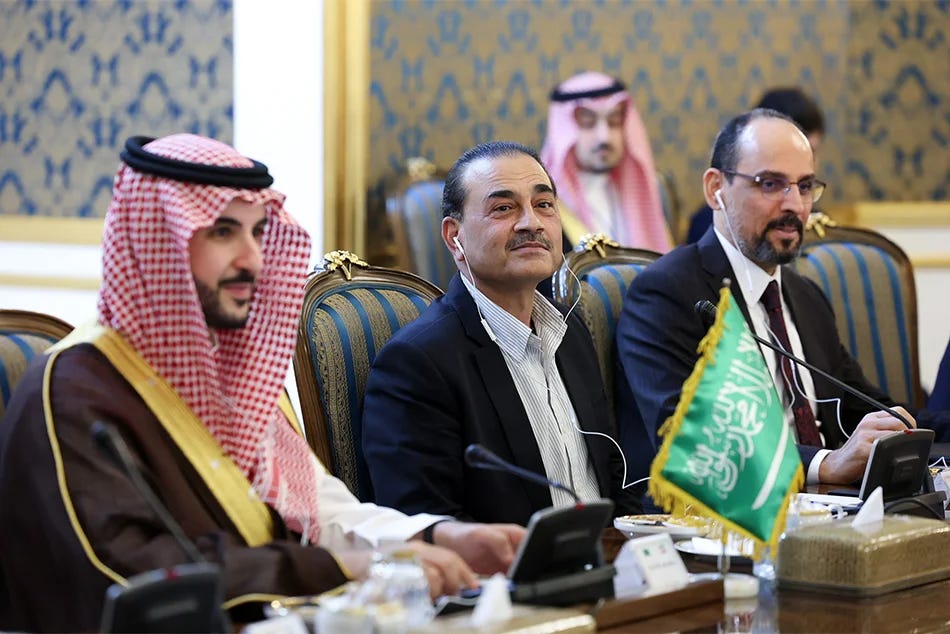
On October 26, Saudi Defense Minister Prince Khalid bin Salman traveled to Tehran alongside senior Turkish and Pakistani officials for talks with their Iranian counterparts. The three countries are signatories to the Makkah Joint Defense Agreement, signed in August, which considers an attack on one member an attack on all. The visit came amid continued Houthi attacks on Saudi Arabia and heightened regional tensions involving Iran.
The visit generated a debate among Gulf academics and commentators over the purpose of the defense pact, the effectiveness of deterrence, and whether negotiations with Tehran can address the threats facing Saudi Arabia.
UAE academic Abdulkhaleq Abdulla captured the apparent contradiction in a pointed question on X: “The Makkah Alliance knocks on Tehran’s doors ... and the result?!”
Ebtisam Al Ketbi, founder and president of the UAE-based Emirates Policy Center, offered a more detailed interpretation of the meeting. She argued that the Makkah Agreement countries traveled to Tehran to test whether military deterrence could be converted into diplomatic leverage. Iran, meanwhile, was pursuing a different objective: transforming its recognition as a party to the regional crisis into recognition as an indispensable partner in managing regional security. Al Ketbi warned that Iran might succeed in moving from being a threat to regional security to becoming one of its guarantors without necessarily abandoning the instruments through which it exercises pressure.
For her, the real measure of success was not the opening of diplomatic channels but a tangible change in Iranian behavior, particularly toward Gulf countries and freedom of navigation. Otherwise, she cautioned, the meeting could represent another round of managing escalation rather than a settlement that addresses its underlying causes.
Yousra Adil, writing in the UAE newspaper Al Khaleej, questioned the effectiveness of the Makkah defense agreement, noting that Houthi attacks on Saudi Arabia continued despite its collective defense commitment. She pointed out that Turkish Defense Minister Yasar Guler had ruled out direct military confrontation with the Houthis, although this did not exclude defensive assistance. For Adil, the central question was what value a defense agreement holds when its members differ over the nature of threats and the limits of their response. She argued that deterrence depends not on written commitments alone but on convincing adversaries that challenging them carries consequences.
Kuwaiti academic Khalid Alnefisi, meanwhile, warned Saudi Arabia against returning to negotiations with the Houthis. In a post on X a day earlier, he wrote:
“Beware of pursuing a political track with the Houthis. Remember the Geneva negotiations of 2015, Kuwait in 2016, and Sweden in 2018. All failed and allowed the Houthis to rebuild their strength and attack us again.”
