
The Gulf Nashra Weekly Digest
Abu Dhabi Announces $1 Billion in Energy Projects in Yemen, Commentary on the Muslim Brotherhood’s U.S. Terrorist Designation, and a Book on Sino–Middle Eastern Futures.

Media Coverage
Market & Economy
“Saudi Arabia may reduce January oil prices to Asia to five-year low.” Reuters, November 28, 2025.
“A cut in prices could spur term demand from China, where independent refiners received the first batch of 2026 import quota this week, said one of the survey respondents. Saudi crude OSPs are usually released around the fifth of each month, and set the trend for Iranian, Kuwaiti and Iraqi prices, affecting about 9 million barrels per day (bpd) of crude bound for Asia.”
“Kuwait’s downstream oil merger nearing completion.” AGBI, November 28, 2025.
“Kuwait’s merger of two state-owned oil companies is close to completion nearly two years after a landmark plan to restructure the country’s hydrocarbon sector was officially endorsed.”
Go Deeper: “Kuwait pushes ahead with oil sector restructuring.” AGBI, August 20, 2025.
“Bahrain suffers S&P downgrade as debt rises.” Samafor, November 26, 2025.
“Bahrain’s sovereign debt has been pushed further into junk status, after S&P lowered its credit rating on the country from B+ to B. It is the first cut by one of the big three agencies since 2020, but may not be the last: Fitch placed Bahrain on negative outlook this year.”
Go Deeper: “Delaying the Inevitable: S&P Downgrades Bahrain, But Upgrades Kuwait.” Finance Middle East, November 24, 2025.
“IMF lauds Oman’s economic progress.” Samafor, November 28, 2025.
“Government revenue was down 8% year-on-year in the third quarter amid lower oil prices, but spending edged up 2%. The IMF has urged “continued progress” on tax and subsidy reforms to keep the country’s finances on a sustainable path.”
Go Deeper: “IMF Staff Completes 2025 Article IV Mission to The Sultanate of Oman.” IMF, November 25, 2025.
“Abu Dhabi’s GSU to launch $1 billion energy projects in Yemen.” Reuters, November 26, 2025.
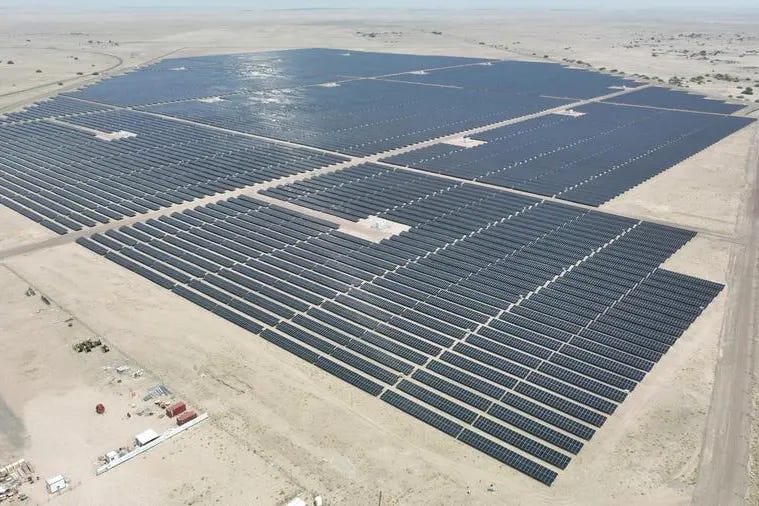
“While solar power represented only 10.4% of Yemen’s total electricity generation in 2023, according to the International Energy Agency, this is expected to rise with a second phase of the Aden Solar Power Plant planned for 2026 to double its capacity.”
Go Deeper: “Israel, the UAE, and Yemen’s South: The Politics of Unlikely Alliances.” Arab Center, November 14, 2025.
Domestics
“Dubai approves 2026-28 budget, with $82.41 billion in expenditures, state news agency says.” Reuters, November 23, 2025.
“Expenditure for the fiscal year 2026 is projected at 99.5 billion dirhams while revenues are expected to reach 107.7 billion dirhams, the state news agency said.”
Go Deeper: “Mohammed bin Rashid Approves Dubai Government’s General Budget Cycle for 2026-2028.” Government of Dubai, November 23, 2025.
“Saudi Arabia to open new alcohol stores despite ban, sources say.” France 24, November 24, 2025.
“The launch of outlets in the eastern province of Dhahran and one for diplomats in the port city of Jeddah would be a further milestone in efforts, led by de facto ruler Crown Prince Mohammed bin Salman, to open up the country.”
“Bahrain makes Golden Visa more affordable, slashes investment threshold.” Gulf News, November 30, 2025.
“According to the media reports in Bahrain, property investment requirements to qualify for the Golden Visa has been slashed from BHD 200,000 (US$530,555) to BHD 130,000 (US$345,000), a 35% reduction.”
Go Deeper: “Bahrain Becomes More Competitive in GCC with New US$345,000 Residency Threshold.” OutBound Investment Group, November 29, 2025.
“Qatar plans new data cable corridor to EU to reroute internet around Red Sea.” Samafor, November 28, 2025.
“The country’s biggest telecom company Ooredoo will invest more than $500 million in fiber running from Oman through Iraq and Türkiye into Europe, a path it says will deliver faster connections.”
Gulf Opinions
This week, Gulf commentators focused on the US decision to designate the Muslim Brotherhood as a “foreign terrorist organization,” a move that generated both skepticism and guarded approval across the region. Mishary Dhayidi of Saudi Arabia questioned the very feasibility of such an action, asking, “Is it really possible to ban and prosecute the Muslim Brotherhood?” He argues that although the Trump administration’s effort to blacklist and pursue certain branches of the Brotherhood is significant, it is unlikely to be definitive or sustainably enforceable, given that the movement operates as a vast ideological network extending across politics, media, education, and culture. Abdulrahman Al-Rashed echoed these doubts while emphasizing that, because the organization rejects the nation-state itself, the policy—despite its uneven scope—is expected to quietly satisfy many Arab governments. By targeting financing channels and media platforms, the decision counters a movement that threatens domestic stability while drawing power from transnational alliances. Emirati commentators were notably aligned with Al-Rashed. Dr. Mohammed Al-Azizi argued that the Brotherhood does not simply seek political power but strives to create a “parallel society” that substitutes national loyalty with an identity fundamentally opposed to the state, thereby eroding social cohesion and transforming citizens into ideological outsiders. Mohammed Yousef expanded on this point, citing Gaza as an example where the organization, through Hamas, links “resistance” to a transnational Brotherhood identity that undermines national belonging and fuels internal fragmentation.
Qatari scholar Dr. Abdullah Al-Emadi also connected the discussion to the Palestinian cause, but from a different angle, contending that Trump’s designation was driven primarily by Israeli narratives and congressional pressure from pro-Israel lobbying groups. He argues that the deeper purpose is to weaken Palestinian resistance movements whose survival perpetuates the very idea of resistance against an international system intent on shaping outcomes to its own advantage. Meanwhile, Bahrain’s Abdullah Al-Junaid, writing in Oman Daily, asked what the regional landscape might look like “after the Muslim Brotherhood,” asserting that the classification is justified by the group’s documented links to violent extremism and represents a strategic opportunity for the United States and its allies to intensify cooperation against global Islamist networks. For Al-Junaid, however, the success of this step hinges entirely on implementation: real impact requires targeting operatives involved in funding, recruitment, and violent activity—not merely issuing symbolic bans—and ensuring diplomatic coordination among states that already view the Brotherhood as a threat. Otherwise, he warns, the region may not end up with just one Muslim Brotherhood, but with the same organization multiplied in new forms.
More Gulf Opinions
“The state [of UAE] that has built the most open economy in the region and invested billions of dollars in brotherly and friendly countries cannot risk damaging its relationships with any ally through futile adventures. And the UAE, which was the first to extend its hand to Turkey in the country’s most difficult economic circumstances, cannot be the same state to which baseless accusations are now being attributed. Relations between nations are not managed through double standards, and the UAE — for those who know its foreign policy — has never been a country with two faces, one public and another concealed. Those who truly understand the UAE know that it pursues a policy founded on clarity and mutual respect. It says what it does and does what it says, and it has no need to provoke confrontation with a friendly state at a moment when it is working to strengthen regional stability rather than ignite suspicion or fuel crises.”
Ali Obaid Alhameli, Al Bayan, (UAE), November 30, 2025.
“With the geographic origins of these [X Twitter] accounts becoming clearer, the surprises multiplied as though hidden chess pieces had suddenly appeared on the board. Some accounts wave the banners of Arab causes and issue emotional slogans, while their broadcast signals originate from Tel Aviv or distant European cities. These are no longer merely “fake accounts,” but entities closer to identity-less phantoms or electronic sleeper cells operating remotely to engineer discord. Among the revelations uncovered by the new feature was an account that claimed to be located in Saudi Arabia but was in fact broadcasting from inside Israel, presenting itself as an expert capable of recovering accounts and solving technical problems in exchange for sensitive personal information. Such cases are not incidental; they are part of what modern studies describe as “troll farms,” linked to state-backed campaigns aimed at reshaping public sentiment.”
Yaser Saleem, Al Bilad, (Bahrain), November 30, 2025.
Washington’s hesitation [to sell F35] will send a clear message to Riyadh that a full partnership is not available from the American side, prompting the Kingdom to seek other sources that do not place its defensive sovereignty at the mercy of a third party. The biggest loser in this scenario would be American influence itself, which could lose its privileged position within Saudi defense architecture for decades to come. Accordingly, the question now circulating in Washington is: Will Saudi Arabia acquire fifth-generation capabilities?”
Dr. Abdullah Alrebh, Asharq Al-Awsat, (Saudi Arabia), November 29, 2025.
“The world will likely face a period marked by an unrestrained spiral of global debt that undermines economic growth and sustainable development. The compounding debt burdens, frozen financial markets, and mounting deficits in most countries have pushed many states to partially abandon the U.S. dollar system (which, ultimately, is fed by their own tax money). Without doubt, the world is heading toward a multipolar currency system, a diversification of financial dealings, and more international trade conducted outside the dollar. However, the short term may bring volatility, due to liquidity shortages — the natural outcome of the United States being the sole issuer of the greenback. This transitional phase will be less stable, but the most important point is that global economic crises will weigh heavily on the Global South. In the long run, the transition will likely be more decisive than the current dollar-dominated system, especially since the U.S. Federal Reserve policies have pushed many borrowers to seek alternatives to the dollar hegemon.”
Mohamed Albehzad, Al Raya, (Qatar), November 29, 2025.
“I worked in New York, as part of my country’s permanent mission to the United Nations, in 1985 during the Reagan presidency. The most pressing global issues at the time were the earthquake disaster in Mexico, the debts of developing countries, and famine in Africa, but what I truly felt was that life there could be summed up in two words: buildings and work. I lived on Second Avenue, and when I went downstairs to buy food, a man asked me, ‘Do you want drugs?’ and another said, ‘Give me money,’ and I gave it to him out of fear. They enforce laws strictly, while we have kind feelings; and I am not saying that Arab countries are a paradise, but we do have warmth, generosity, and a remarkable history—qualities that make life beautiful and that Western newspapers never acknowledge. From time to time, European and American media insult Arabs when speaking about the Arab world, publishing terms like “Islamic terrorism,” or focusing on women wearing hijab, while pointing to Finland as the happiest country in the world. Their analysis is unfair.”
Ahmed Al-Dawwas, Alseyassah, (Kuwait), November 27, 2025.
“In the end, the European amendments to Trump’s peace plan do not appear to be mere ‘technical improvements,’ but rather a clear expression of a different geopolitical vision in the Old Continent regarding the future of Euro-Atlantic security. The Europeans—who bear the geographic, economic, and political costs of the war more than anyone else—do not want a quick peace built on unilateral concessions that would weaken Ukraine and cement Russia’s influence, nor do they want the plan to turn into a U.S.–Russian project that bypasses their interests. Therefore, their proposals came with the aim of strengthening Kyiv’s defensive posture, raising the ceiling of security guarantees, and tightening the conditions of the territorial and financial settlement, in a way that ensures another war is not reproduced in the coming years.”
Hussain Al Rawi, Al Roya, (Oman), November 25, 2025.
“And despite this deep disagreement between Europeans and Americans over how to handle the Ukraine war, they are united without bounds in supporting the Zionist entity in its genocide war against besieged Gaza residents, and in backing its military attacks on Arab countries. Perhaps this dangerous shift in American policy will serve as a lesson for Arabs not to take U.S. claims of supporting peace in our Arab region seriously, or to consider it an ally on which they can rely.”
Sultan Al Khalaf, Al Rai, (Kuwait), November 25, 2025.
Picks
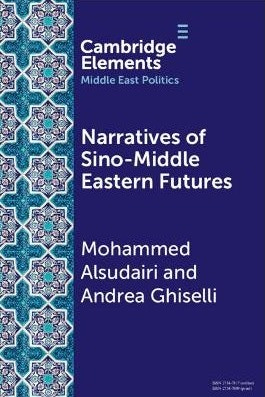
Book: Alsudairi, Mohammed, and Ghiselli, Andrea, “Narratives of Sino-Middle Eastern Futures.” Cambridge Elements, August 6, 2025, [PDF].
Research: “Deconstructing Dichotomies: Explaining Contemporary South Asian Emigration to the UAE Beyond Economics.” Mohammad Amaan Siddiqui, Manal Nadeem, Neha Vora, Springer, November 22, 2025.
Research: “Challenges to Kuwaiti Women’s Integration in the Private Sector.” Lubna Ahmed Al-Kazi, Springer, November 22, 2025.
Research: “Understanding Gulf States’ Foreign Aid: A Conceptual Framework.” Altea Pericoli, The International Spectator, Jun 4, 2025.
Analysis: “Delaying the Inevitable: S&P Downgrades Bahrain, But Upgrades Kuwait.” Angus Anderson, Finance Middle East, November 24, 2025.
Analysis: “How to Boost Clean Hydrogen in Saudi Arabia.” Jan Haizmann and Jan Frederik Braun, Energy Intelligence Group, November 20, 2025.
Analysis: “Saudi Arabia Advances 15 GW of Solar and Wind Capacity.” John Benny, Energy Intelligence Group, November 28, 2025.
Analysis: “Catalysing the GCC’s Waste-to-Energy Prospects for Agriculture.” Leigh Mante, ORF, November 28, 2025.
Analysis: “Pageantry and Influence: Inside MBS’s Strategic Reset with Washington.” John Calabrese, Gulf International Forum, November 26, 2025.
Analysis: “What Do Saudi workers actually think about their labor market?” Meshal Alkhowaiter, Saudi Labor Pulse, November 23, 2025.
Podcast: “Power, Money, Morality: The Collapse of Capitalism & The Military-Industrial Complex.” Mo Gawdat, The Mo Show, November 6, 2025.
Podcast: “How is the mental health of Saudis? Abdulhamid Al-Habib, Socrates Podcast, November 18, 2025.
Podcast: “How Did Digitalization Enslave Us?” Farraj Al-Saeedi, Al-Bisat Ahmadi Podcast, November 10, 2025.