

Media Coverage
Geopolitics
“UK sends fighter jets to Qatar as fears rise over Iran conflict.” The National, January 23, 2026.
“There is also a fear that Iran could repeat its strike on Al Udeid, after Tehran launched a rocket attack in June last year after US strikes on nuclear sites. The airbase houses US Central Command, making it a potential target for Iranian action.”
“Saudi Arabia, Turkey, Egypt, Jordan, Indonesia, Pakistan, Qatar, UAE join Trump’s ‘Board of Peace’.” Reuters, January 21, 2026.
“DUBAI, Jan 21 (Reuters) - Saudi Arabia, Turkey, Egypt, Jordan, Indonesia, Pakistan and Qatar have accepted invitations to join U.S. President Donald Trump’s “Board of Peace”, the Saudi foreign ministry said in a joint statement that also included the United Arab Emirates.”
Go Deeper: “The Trump Administration and the Fracturing Saudi-UAE Alliance.” Arab Center, January 21, 2026.
“UAE utility withdraws from Yemen and transfers solar power plants to the government.” The New Arab, January 23, 2026.
“GSU informed the Public Electricity Corporation of the evacuation of all operations and maintenance teams from the Aden solar power plant, which has capacity of 120 megawatts (MW), and the 53 MW Shabwa solar power plant in a letter dated January 22, its statement said.”
Market & Economy
“Feb 9: PIF–Private Sector Forum to convene as market awaits fund’s new strategy.” Maal, January 11, 2026.
“Saudi Arabia’s Public Investment Fund will hold the fourth edition of the PIF–Private Sector Forum in partnership with the private sector on Feb. 9–10, 2026, in Riyadh, as anticipation builds around the fund’s upcoming strategy.”
Go Deeper: “Private Sector Forum 2026.” PIF, January 2026.
“PIF-backed Humain secures up to $1.2bn to expand AI infrastructure.” Arab News, January 22, 2026.
“The non-binding agreement, announced on the sidelines of the World Economic Forum annual meeting in Davos, sets out financing terms to develop as much as 250 megawatts of AI data center capacity to serve Humain’s local, regional and global customers, according to a statement.”
“Saudi Arabia attracts 122 million tourists, pumping SR300 billion into national economy in 2025.” Gulf News, January 21, 2026.
“Under Vision 2030, the kingdom aims to lift tourism’s contribution to GDP to 10 per cent, diversify income streams and cement its status as a competitive global destination through sustained private-sector partnerships and a focus on sustainable growth.”
Go Deeper: “Inbound and Domestic Tourism Indicators Q3 YTD 2025.” Tourism Ministry, December 23, 2025.
“QIA and Goldman Sachs plan to expand partnership with $25bn investment target.” Arab News, January 21, 2026.
“Under the memorandum of understanding, QIA will commit to be an anchor investor in several of the US bank’s flagship and innovative strategies, they said in a joint statement. Goldman Sachs will also look to “meaningfully” increase its headcount in Doha, though it did not provide figures.”
Go Deeper: “Artificial Intelligence in Qatar: Assessing the Potential Economic Impacts Tongfang Yuan.” IMF, March 2025. [PDF].
“Commercial Bank’s Net Profit Drops by 27.3 Percent in 2025.” QNA, January 18, 2026.
“The Commercial Bank, a Qatari public shareholding company, reported a net profit decline of 27.3 percent in 2025, reaching QAR 2.204 billion, compared to QAR 3.032 billion in 2024.”
“Vision 2030 projects may drive corporate loans by Saudi banks to $75bln in 2026.” Global Business and Finance Magazine, January 23, 2026.
“Retail lending, especially mortgages, is likely to grow amid continued declines in interest rates. Mortgages constitute roughly half of total retail lending, which rose by 5% in the year to November 30, 2025.”
“Banks’ return on average assets is expected to dip slightly to 2.2% in 2026 due to the contraction and higher cost of risk.”
“Kuwait looks to the cloud as power grid feels the strain.” AGBI, January 23, 2026.
“Kuwait has invited bids to construct three power substations that will supply electricity to Google Cloud and Microsoft data storage centres, a move that raises questions about the country’s ability to support energy-intensive cloud infrastructure.”
“Oman signs power deals with Qatar’s Nebras and Korea Western Power worth $2.6bln.” Zawya, January 22, 2026.
“The projects include the Misfah Power Plant, with a total capacity of 1,700 megawatts, and the Duqm Power Plant, with a total capacity of 877 megawatts, both under 20-year agreements, QNA said.”
“Nebras Energy acquired a 49% stake in the Misfah Power Plant and a 30% stake in the Duqm Power Plant, QNA added.”
“Dubai allocates $3.5bn to expand Silicon Oasis free zone.” AGBI, January 23, 2026.
“The Dubai government has allocated AED12.8 billion ($3.5 billion) to expand the free zone, which is managed by the state-run Dubai Integrated Economic Zones Authority.”
“District IO will account for AED11 billion of the sum and aims to provide infrastructure to support future technologies and strengthen research, development and innovation, the UAE state-run news agency said.”
“GCC debt capital market to rise to $1.25trln in 2026.” Zawya, January 22, 2026.
“The forecast growth of the market this year will be roughly 13.6%, from $1.1 trillion seen at the end of 2025, supported by lower oil prices, interest rate cuts and further diversification efforts.”
“The majority of Fitch-rated sukuk in the GCC, around 84%, are investment-grade, and 90% of issuers have a stable outlook. The GCC outstanding DCM at the end of last year was up by 14% from a year ago.”
Go Deeper: “GCC: Growth set to strengthen in 2026 as hydrocarbons production picks up.” Emirates NBD, December 18, 2025.
“Engie doubles down on Gulf renewables as EU and US momentum slows.” AGBI, January 19, 2026.
“French utility giant Engie has reached financial closing on a 1.5-gigawatt (GW) solar park in Abu Dhabi as it steps up projects in the Middle East amid a renewables slowdown in the US and Europe.”
“The Khazna park is set to begin commercial operations in 2028 and will supply 160,000 homes across the UAE under a 30-year power purchase agreement with Emirates Water and Electricity Company.”
Go Deeper: “Assessing the United Arab Emirates’ institutional and investment frameworks to catalyse the renewable energy transition.” Oxford Press, November 27, 2025.
“UAE attracted $45bln FDI in 2025, up 50%.” Zawya, January 22, 2026.
“The UAE attracted over $45 billion in foreign direct investment last year, up nearly 50% year-on-year, even as global FDI declined by 11%, said a senior official.”
Go Deeper: “United Arab Emirates: 2025 Article IV Consultation-Press Release; Staff Report; and Statement by the Executive Director for United Arab Emirates.” IMF, December 8, 2025. [PDF].
Domestics
“Civil service reforms clear council, await Cabinet review.” Kuwait Times, January 20, 2026.
“The reforms follow a review by the Supreme Judicial Council in late December. The council submitted a report to Justice Minister Nasser Al-Sumait highlighting gaps in the law and recommending updates to reflect advances in digital administration, governance standards and public service management practices.”
“Oman targets 50,000 jobs in private sector.” Oman Observer, January 21, 2026.
“It says Oman has about 74,000 job-seekers, and through the Sahim program the Ministry of Labour has already placed most of them in permanent jobs, while the rest are waiting for budgeted salary grades to become available.”
Gulf Opinions
Saudi-UAE Media Crossfire
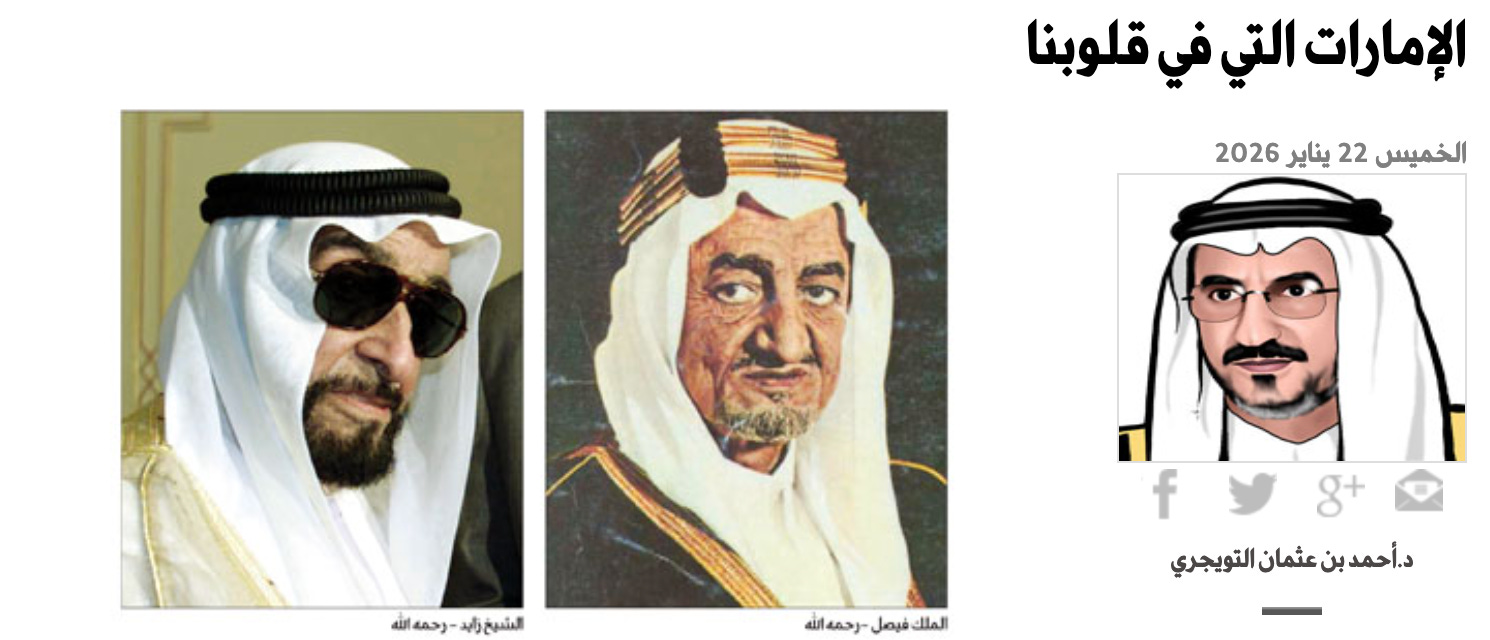
A recent Al-Jazirah article by Saudi writer Dr. Ahmed bin Othman Al-Tuwaijri sparked an intense debate on X, generating sharply divided reactions over its unprecedented criticism of Abu Dhabi policies. Al-Tuwaijri argued that tensions between Saudi Arabia and the UAE do not reflect hostility toward the Emirati people, but opposition to policies he views as destabilizing to the Arab region, particularly in Yemen and other conflict zones. He contrasted Saudi Arabia historical role in supporting UAE independence and unity with what he described as Abu Dhabi geopolitical adventurism, attributing it to lingering resentments, rivalry over Saudi Arabia religious and strategic standing, and unease over the transformations driven by Vision 2030. Central to his argument was what he called “the false illusion that the shortest path to avenging past grudges and curing envy and a sense of inferiority toward the Kingdom lies in throwing itself into the arms of Zionism and accepting to act as Israel Trojan horse in the Arab world,” portraying Saudi Arabia as patient and principled while casting Abu Dhabi actions as harmful to broader Arab and Islamic interests.
Emirati commentators reacted forcefully, rejecting the article as containing baseless accusations and methodological flaws. Several aligned with Israeli journalist Barak Ravid characterization of the piece as “anti-Semitic,” while Emirati academic Abdulkhaleq Abdullah described it as “media thuggery” that spreads conspiracy narratives and fuels hatred, arguing that such rhetoric has already prompted Western pushback and the removal of inflammatory content. Mohammed Al Hammadi added that although the cited sources formally exist, they do not support the conclusions drawn, accusing the author of exaggeration and selective distortion. Ahmed Khalifa echoed this view, describing the article as “childishness” that relies on fabrications and inflammatory claims.
Saudi responses, by contrast, largely defended the article and rejected the charge of “anti-Semitism,” with most Saudi commentators viewing it as a legitimate critique of Abu Dhabi policies rather than an attack on identities. At the same time, other Saudi academics adopted a more structural and analytical approach. Saudi academic Sultan Al Amer argued that freedom of expression necessarily separates individual opinion from state policy, stressing that in open systems “freedom of expression relieves the government of bearing responsibility for the opinions of its citizens.” Meanwhile, Mohanna Alhubail described the article as a rare moment that “opens the Saudi stage,” arguing that it exposes Abu Dhabi alignment with Tel Aviv against Palestinian resistance—an alignment he called “an absolute evil against the Ummah”—while still reserving doubts about some historical details. Amid apparent editorial hesitation at Al-Jazirah, where the article was removed and reinstated more than once, the debate it triggered continues to expose a widening and more public Saudi–Emirati divergence.
Davos
On another note, Gulf commentators shared their voices on the world leaders’ gathering at the 56th World Economic Forum in Davos (19–23 January 2026), reading the event as a signal of shifting global priorities amid economic and geopolitical uncertainty. From a Saudi perspective, Dr. Abdulaziz Al Jarallah argued that Saudi Arabia participation underscored its expanding role in “global dialogue and economic transformation,” presenting Vision 2030 as a development model. He noted that the Saudi delegation sought to “enhance effective dialogue and joint cooperation” while highlighting “Saudi success stories emerging from Vision 2030,” as the Kingdom advances longer-term ambitions such as Vision 2040 and hosting Expo Riyadh 2030. Building on this theme, Saudi commentator Hamood Abu Talib contrasted Saudi Arabia’s earlier “symbolic presence” at Davos with its current prominence, arguing that this shift followed the launch of Vision 2030 and the “tremendous momentum of achievements” delivered by its programs. He concluded that such transformation is possible when states possess “the necessary resources, vision, and skilled and effective management.”
Other Saudi voices emphasized geopolitics rather than development. Mishary Dhayidi focused on the centrality of “power” at Davos, rejecting Chinese Vice Premier He Lifeng warning against a return to the “law of the jungle.” Instead, Dhayidi framed Donald Trump foreign policy as an expression of the enduring “right of power,” citing Greenland as a stark example and arguing that, in Trump view, figures like Emmanuel Macron “do not register in the real balance of power.” Veteran economist Ihsan Ali Buhulaiga offered a different geopolitical reading, contending that China emerged as the principal beneficiary of Davos 2026. Beijing, he argued, presented itself as a “calm and reliable leader” amid controversy surrounding Trump foreign policy, deliberately distancing itself from “unilateralism and protectionism.” By emphasizing “multilateralism and free trade,” “rules-based engagement,” and the importance of “globalization,” China repositioned itself as a stabilizing force. From a Kuwaiti perspective, Abdulla Hassan Thakur interpreted Davos 2026 as marking a shift toward an “economy of uncertainty,” where geopolitical friction, technological disruption, and institutional trust now shape economic decision-making. As global capital is repriced toward stability, he argued, investors increasingly favor jurisdictions with “strong institutions,” policy continuity, and predictability. In this environment, Kuwait stands out, with its “fiscal strength, institutional credibility, and balanced global integration” positioning it as a “reference point for stability” at a time when such qualities are becoming increasingly scarce.
Nashra Picks
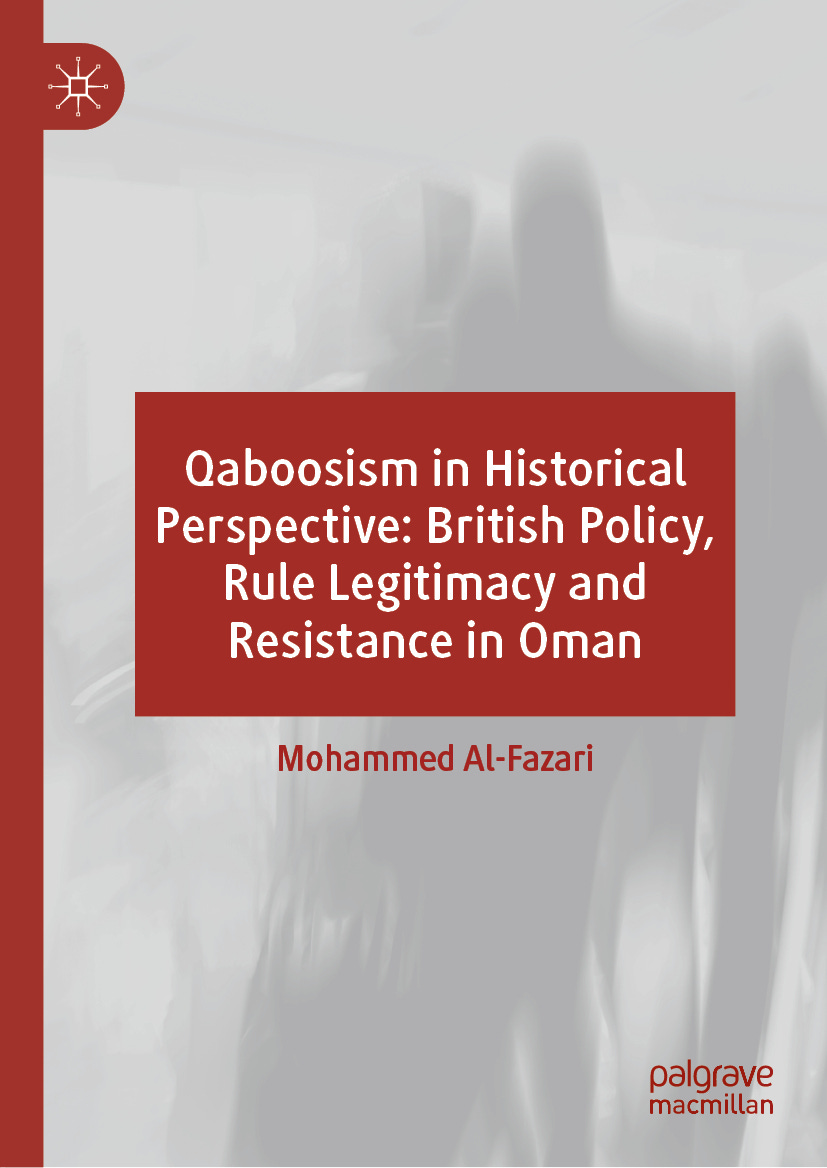
Book: Mohammed Al-Fazari “Qaboosism in Historical Perspective: British Policy, Rule Legitimacy and Resistance in Oman.” Palgrave Macmillan, February 2026.
Analysis: “When Gulf Allies Fall Out.” Olivia Cuthbert, Middle East Uncovered, January 16, 2026.
Analysis: “Saudi Arabia’s Rental markets between Q3-Q4 2025.” Meshal Alkhowaiter, Saudi Labor Pulse, January 18, 2026.
Analysis: “In a fragmented world, strategic autonomy is the UAE’s North Star.” Ebtesam AlKetbi, Emirates Policy Center, January 22, 2026.
Analysis: “The Trump Administration and the Fracturing Saudi-UAE Alliance.” Giorgio Cafiero, Arab Center, January 21, 2026.
Analysis: “Gulf States on the Frontline of U.S.-Iran Volatility.” Kristian Coates Ulrichsen, Arab Gulf States Institute in Washington, January 23, 2026.
Analysis: “A New Agreement on Economic Security: What Does It Mean for the UAE and Qatar to Join the Pax Silica Alliance?” Emirates Policy Center, January 21, 2026.
Analysis: “A year into his return, Donald Trump has changed the Middle East – but he is only getting started.” Paul Salem, Middle East Institute, January 20, 2026.
Analysis: “China-Middle East Connectivity: Iraq, Egypt, and Oman.” Nicholas Lyall, New Lines Institute, January 22, 2026. [PDF].
Analysis: “Why US markets are betting on Saudi Arabia.” Khalid Azim, Atlantic Council, January 21, 2026.
Analysis: “Saudi Arabia, Strategic Clarity, and the Architecture of Middle East Stability.” Ahmed Charai, The National Interest, January 12, 2026.
Analysis: “How the UAE Became Serbia’s Most Important Arab Partner.” Giorgio Cafiero, Arab Gulf States Institute in Washington, January 22, 2026.
Analysis: “Why Is Saudi Arabia Abandoning Peace?” Hussain Abdul-Hussain, The National Interest, January 23, 2026.
Analysis: “Egypt’s Tightrope Walk Between Saudi Arabia and the UAE.” Haisam Hassanein, The Washington Institute for Near East Policy, January 23, 2026.
Podcast: “How Do We Understand the Yemen Issue?” with Badr Al-Qahtani, Socrates Podcast, January 19, 2026.
Podcast: “What Happened in Financial Markets During 2025.” with Anas Al-Rajhi and Saeed Abduljabbar, Arbah Podcast, January 19, 2026.
Podcast: “What does the Saudi-Emirati cold war mean for Israel, Trump and Iran?” with Andreas Krieg, UNAPOLOGETIC, January 23, 2026.