

Media Coverage
Geopolitics
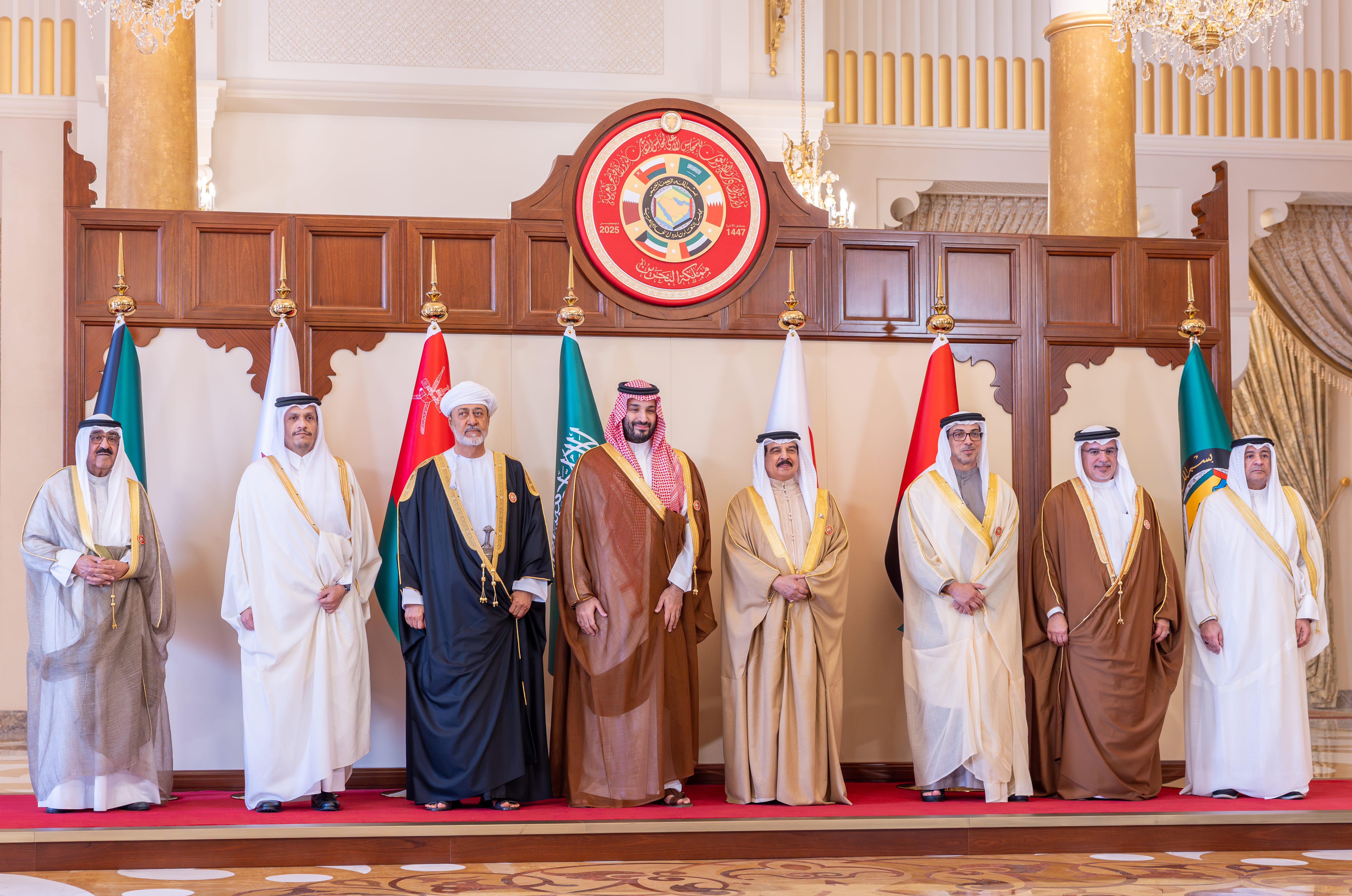
“Manama Summit Seeks to Bolster Joint Gulf Work, Int’l Partnerships.” Asharq Al-Awsat, December 3, 2025.
“The leaders welcomed the outcomes of the Sharm el-Sheikh Peace Summit, held in October, and underlined their support for regional and international efforts aimed at ensuring full adherence to the agreement to end the war in Gaza, facilitating the delivery of humanitarian aid and reconstruction.”
Go Deeper: “Security and prosperity of Gulf states ‘indivisible’, says Bahrain’s King Hamad.” The National, December 03, 2025.
“Russia and Saudi Arabia sign deal for visa-free travel.” Reuters, December 1, 2025.
“Russia and Saudi Arabia on Monday signed an agreement to implement a visa-free regime for tourists and business people from the two countries for up to 90 days, the Russian government and the Saudi foreign ministry said.”
“Saudi Arabia provides over $142 billion in aid to 173 countries.” Arab News, November 28, 2025.
“Since its establishment in 2015, KSrelief alone has implemented 3,881 projects valued at over $8.25 billion in 109 countries, covering key sectors including health, food security, education and water.”
“Oman joins other Gulf powers in African renewables race.” Samafor, December 5, 2025.
“An Omani investment roadshow landed in South Africa in early December; last year, Oman’s Maaden International Group (not to be confused with the Saudi mining giant also called Maaden), acquired a 41% stake in Angolan diamond miner Catoca.”
Market & Economy
“GCC debt issuance hits record $226bln in 2025, while IPO activity sharply declines.” Zawya, December 5, 2025.
“GCC debt issuance surged to its highest level this past decade, totalling $226 billion in the year to November 11, 2025, while surpassing last year’s record of $136.3 billion.”
“World Bank Forecasts 4.3% Growth for Saudi Economy, Supported by Non-Oil Activities.” Asharq Al-Awsat, December 5, 2025.
“Non-oil activities expanded by 4.8% over the period, in line with the performance of 2024 while non-oil growth was driven by the wholesale, retail trade, restaurants, and hotels sector (+7.5% y/y in the first half of 2025), consolidating the role of hospitality and tourism as engines of economic diversification.”
Go Deeper: “Gulf Economic Update : The Gulf’’s Digital Transformation - A Powerful Engine for Economic Diversification.” World Bank, December 4, 2025. [PDF].
“Saudi Arabia forecasts deficit of $44 billion in 2026 budget.” Reuters, December 2, 2025.
“The kingdom projected a deficit of 165 billion riyals ($44 billion), or about 3.3% of gross domestic product. That would be down from the 245 billion riyals it now estimates for this year after lower oil prices and production weighed on revenue and spending overshot the budgeted level by around 4%.”
Go Deeper: “Putting the 2026 Saudi Budget Under the Microscope.” Tim Callen, Arab Gulf States Institute in Washington, December 4, 2025.
“China and UAE top Saudi export markets in third quarter.” AGBI, December 5, 2025.
“China accounted for 15 percent of the kingdom’s total exports, valued at SAR45 billion ($12 billion), the state-run Saudi Press Agency reported, quoting the General Authority for Statistics data.”
Go Deeper: “Imports and Influence: China’s Growing Economic Presence in the Gulf.” Carnegie, October 30, 2025.
“Oman set to finalise 2GW green projects by year-end.” AGBI, December 5, 2025.
“A consortium comprising OQAE, the UAE’s Masdar and South Korea’s Midland Power last week appointed Chinese state-owned CPECC as the engineering, procurement and construction contractor for the 500-megawatt Ibri III independent solar power project in northwest Oman.”
Go Deeper: “Reforming for Resilience in Oman: Environmental Risk and Policy Capacity.” Carnegie, September 12, 2025.
“Kuwait moves to shut down informal money networks with new ban on alternative remittance systems.” Zawya, December 3, 2025.
“The Alternative Remittance System is an informal method of transferring funds outside the official financial system. It relies on individual brokers who receive money in Kuwait and deliver its equivalent abroad through unlicensed networks, without passing through regulated banks or licensed exchange companies, and without any formal documentation or financial records.”
“World Bank report forecasts UAE economy to grow by 4.8%.” Zawya, December 4, 2025.
“The report also projected economic growth of 3.8 percent for Saudi Arabia, 3.5 percent for Bahrain, 3.1 percent for Oman, 2.8 percent for Qatar, and 2.7 percent for Kuwait.”
“The report highlights three main pillars: the evolution of economic diversification indicators over the past decade, tracking macroeconomic developments, and focusing on digital transformation.”
“Polysilicon project in Oman gets $200m financing loan.” AGBI, December 5, 2025.
“Oman is targeting a 40 percent contribution from renewables to its electricity requirements by 2040 as it looks to wean its economy off a reliance on hydrocarbons and achieve carbon neutrality by 2050.”
Gulf Opinions
This week, Gulf commentators devoted extensive attention to the forty-sixth GCC Summit, held in Bahrain on December 3rd, underscoring its political, economic, and strategic significance. From Kuwait, Dr. Fawzi Salman Al-Khawari emphasized that the GCC firm adherence to international commitments reinforces its reputation as a reliable strategic partner and a stabilizing force in global affairs. He noted that the Sakhir Declaration reaffirmed the council’s long-standing commitment to collective security, unified foreign policy, and a deeply integrated economic model that has strengthened regional stability and improved the welfare of Gulf citizens for more than four decades. Kuwait’s Dr. Mohammed Al-Rumaihi echoed this view in Asharq Alawsat, arguing that the summit most defining feature was its unequivocal assertion that Gulf security is indivisible—a principle now grounded not only in rhetoric but in concrete joint-defense agreements and clear positions on Iran, regional disruptions, and the protection of vital maritime corridors. Together, these perspectives present a summit determined to translate collective security from aspiration to actionable policy.
From Oman, a parallel debate unfolded over the internal dynamics of Gulf integration and the evolving expectations of Gulf citizens. Hamid bin Mohammed Al-Busaidi argued that citizens now seek more than freedom of mobility; they expect deeper economic integration, seamless cross-border investment, unified labor opportunities that prioritize GCC nationals, and renewed trust in the political will of the six states. He observed that although the GCC has achieved notable economic milestones, the next phase requires faster, more inclusive growth—leveraging the region strategic geography, its influence within OPEC, and its longstanding international partnerships. Fellow Omani commentator Awadh bin Saeed Baquwir added that the path forward depends on accelerating economic and social integration and harmonizing legislation to create a unified economic space capable of elevating the GCC into a major global economic bloc. Commenting on foreign policy, Lolowa Budolama welcomed the summit reaffirmation of its stance on the Palestinian cause, writing that “the leaders welcomed the outcomes of the Sharm El-Sheikh Peace Summit, endorsed the agreement to end the war in Gaza, supported the facilitation of humanitarian aid and reconstruction efforts, and reaffirmed the imperative of establishing an independent Palestinian state in accordance with the two-state solution and the Arab Peace Initiative.”
Beyond politics and economics, Bahraini writer Ali Abdulkhaleq praised the summit unprecedented technological agenda, describing its roadmap for a unified digital Gulf—built on shared infrastructure, harmonized payment systems, cloud services, cybersecurity cooperation, and joint work in artificial intelligence—as a transformative opportunity to shift the region toward a knowledge-based economy. Concluding the discussion, Bahrain’s Salah Al-Jawdar underscored the long-standing call for unity: moving from cooperation to union, a vision first introduced by the late King Abdullah bin Abdulaziz, to form a single, stronger entity capable of meeting global challenges while deepening regional stability, expanding international partnerships, and advancing sustainable development.
More Gulf Opinions
“A close reading of the Muslim Brotherhood’s reality reveals that the issue is not a matter of political failure here or collapse there, but rather a flaw inherent in the Brotherhood project itself. It is a project built on extremist ideological ideas, loyalty to the organization, and a vision that extends beyond the nation-state, treating state institutions as arenas for infiltration and control, and society as a field for polarization and recruitment into its partisan agendas. It embraces dangerous operational strategies such as secrecy, dissimulation, and feigned weakness as a path to empowerment, along with the methods of organizational cells, including sleeper cells. Its leaders operate on the principle that the end justifies the means, manipulating the jurisprudence of necessity to legitimize what they call ‘phase-specific jurisprudence’ and long-term planning. Thus, anyone who attempts to domesticate the Brotherhood is like someone raising a snake in his home: it may appear gentle on the outside, but it is venomous and deadly, and will not hesitate to strike whenever the opportunity arises.”
Ahmad Al Shehi, Al Bayan, (UAE), December 6, 2025.
“We look forward with great enthusiasm to our esteemed government adopting our initiative to establish an Omani research center that would undertake independent studies and research, offering qualitative insights that address societal needs and anticipate the future in a neutral and objective manner—far from the perspectives issued by government institutions, which are often shaped by formal, cautious considerations. All that the relevant government bodies would need to provide is logistical and financial support to ensure the center is founded on solid pillars that guarantee its sustainability, such as allocating a headquarters and an annual funding amount to cover expenses, researchers’ and experts’ costs, and other operational needs.”
Hatim Al-Tai, Al Roya, (Oman), December 6, 2025.
“The conflict in Sudan, which ignited over trivial causes, could have been extinguished early had the right approach been taken. During the Lebanese civil war, several external actors sought to prolong the conflict, yet the intervention that eventually occurred blocked their influence and brought the war to an end. The suffering endured by the people of Sudan is immense: loss of life, hunger, displacement, instability, loss of livelihoods, stalled development, and an almost complete collapse of basic services in the areas of fighting. This is the reality facing the Sudanese people, who are an integral part of the Arab and Islamic world, and there is a pressing need to form a joint committee from the Arab League, the Organization of Islamic Cooperation, and the African Union. This committee must continue its work until the war stops and a settlement acceptable to all warring parties is reached.”
Dr. Khaled Mohammed Boodi, Al Qabas, (Kuwait), December 3, 2025.
“In the end, ‘America First’ is no longer merely a political wave tied to Trump’s rise, but has evolved into a fully integrated current reshaping the American right from within. As its media and grassroots influence expands, the movement appears poised to remain a central player in American politics, whether it continues as a powerful faction within the Republican Party or develops in the future into an independent current with clear contours.”
Majed bin Nuwaiser, Makkah, (Saudi Arabia), December 2, 2025.
“The Earth is 4.5 billion years old, while the emergence of modern humans appears as nothing more than a fleeting moment on its surface, dating back around 200,000 years. If we compressed the entire history of the planet into one calendar year, human existence would amount to only a few minutes.”
“This perspective clarifies where our vision should lie: nations have economic life cycles, and institutions have temporal rhythms that rise and fall, just like living organisms. What determines their longevity is rarely their size, but rather their ability to adapt.”
“In today’s fast-moving global economy, the same pattern repeats itself—only faster. Companies that once dominated their industries now have an average lifespan of no more than fifteen to twenty years. Technological change reshapes markets, converting economic power from one entity to another in a continuous cycle. The lifespan of companies no longer depends on their size or financial capital but on speed, flexibility, and the ability to read time and adapt to it.”
Dr. Abdulraheem Alhour, Al Raya, (Qatar), December 2, 2025.
Nashra Picks
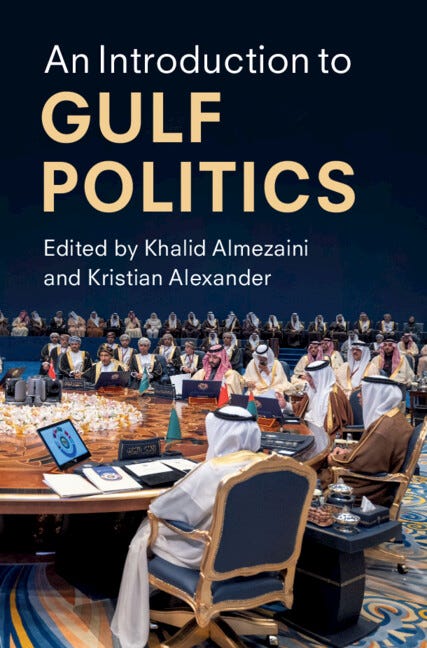
Book: Almezaini, Khalid, and Alexander, Kristian, “An Introduction to Gulf Politics.” Cambridge Press, June 2026.
Analysis: “Is Tehran Rethinking Its Approach to the GCC States?” Ali Alfoneh, Arab Gulf States Institute in Washington, December 3, 2025.
Analysis: “How Abu Dhabi’s economy came to be dominated by IHC.” Chloe Cornish, Financial Times, December 4, 2025.
Analysis: “Why the world suddenly depends on the Gulf more than ever?” Layan Mandani, Medium, December 3, 2025.
Analysis: “Diverging Paths: Gulf Critical Mineral Strategies.” Said Bakr, Arab Gulf States Institute in Washington, December 5, 2025.
Analysis: “Guarding the Gulf: EU-GCC Efforts to Strengthen Nuclear Preparedness.” Leonardo Mazzucco, Gulf International Forum, December 4, 2025.
Analysis: “The Saudi Nuclear Gambit: Atomic Leverage and the U.S. Red Line.” Abdullah Alrebh, Arab Gulf States Institute in Washington, December 4, 2025.
Analysis: “Navigating Rocky Waters: GCC Strategies for Maritime Security.” Rory Miller, Middle East Council on Global Affairs, November 26, 2025.
Analysis: “Blueprints for Autonomy: Turkey and the Gulf Partnership on Defense Industrialization.” Riccardo Gasco and Francesco Schiavi, Arab Gulf States Institute in Washington, December 2, 2025.
Analysis: “Kuwait’s Vision 2035 plan reaches critical juncture.” Gavin Gibbon, AGBI, December 5, 2025.
Analysis: “Two Pillars, One Gulf: China’s High-Stakes Balancing Act between Iran and the GCC.” Yuan Zhang, Gulf Research Center, December 3, 2025.
Analysis: “Putting the 2026 Saudi Budget Under the Microscope.” Tim Callen, Arab Gulf States Institute in Washington, December 4, 2025.
Podcast: “Why did the government decide to establish royal reserves?” hosts Talal Al-Harqi, Socrates Podcast, December 2, 2025.
Podcast: “What the West Gets WRONG About Saudi Arabia.” hosts Mo Islam, Biohack-it podcast, December 4, 2025.