

Media Coverage
Geopolitics
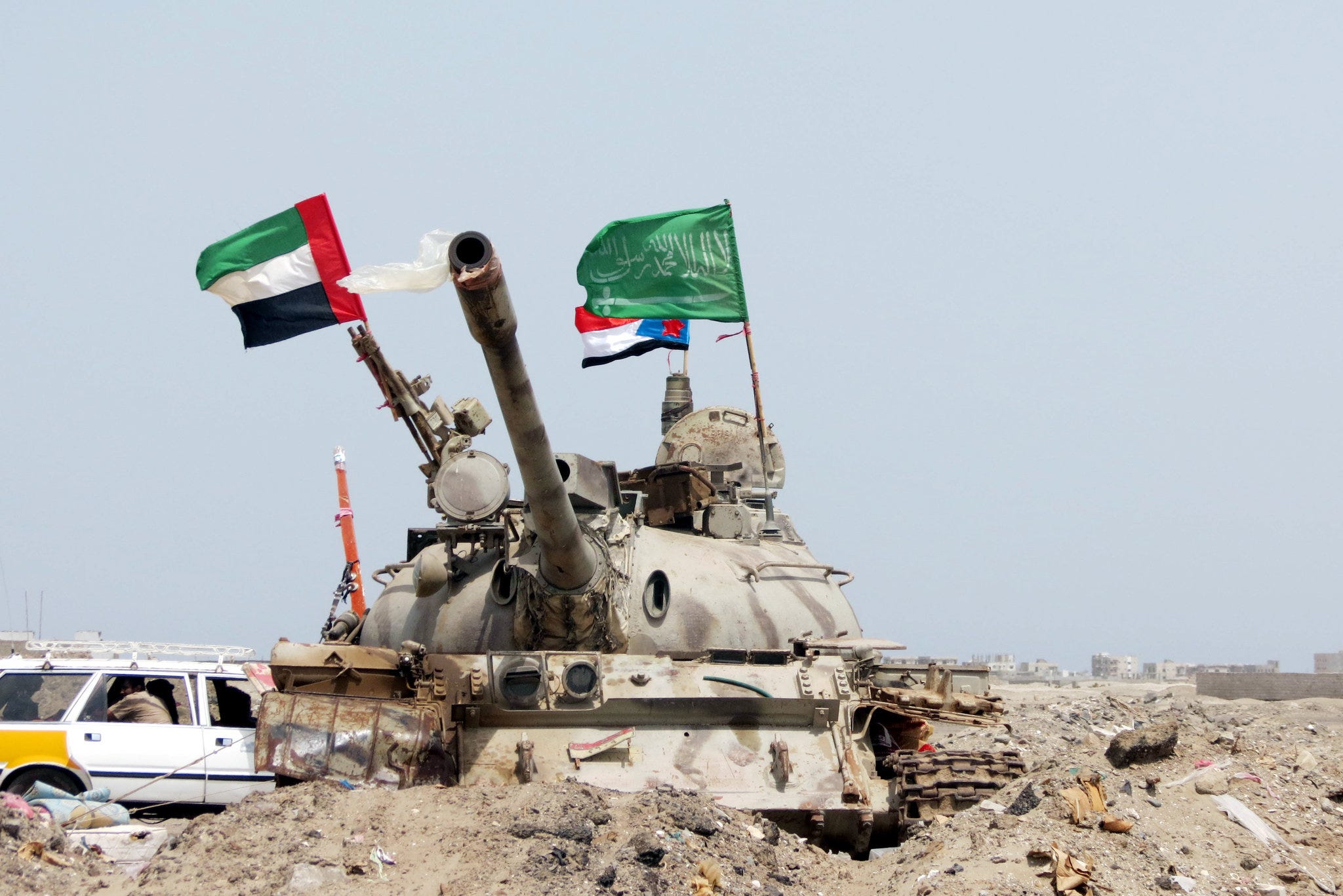
“Saudi-UAE tensions rise over Yemen clashes.” Financial Times, December 10, 2025.
“The UAE-backed Southern Transitional Council this month seized control of two provinces, including Hadhramaut, the nation’s largest and richest region bordering Saudi Arabia, after clashing with Riyadh-affiliated tribal factions.”
Go Deeper: “The UAE is leaving Saudi Arabia squeezed in Yemen.” The Conversation, December 12, 2025.
“Saudi crown prince receives China FM in Riyadh.” Arab News, December 14, 2025.
“During the reception, aspects of Saudi-Chinese relations were reviewed, along with ways to develop them in a manner that serves the common interests of both countries.”
“China’s Wang Yi seeks deeper oil and gas ties with UAE on Middle East tour.” Reuters, December 13, 2025.
“China’s Foreign Minister Wang Yi met his United Arab Emirates counterpart on Friday, pledging deeper cooperation in investment, oil and gas, and infrastructure with the Gulf country, China’s foreign ministry said on Saturday.”
“US will host Doha conference Dec 16 on Gaza stabilization force plans.” Reuters, December 12, 2025.
“More than 25 countries are expected to send representatives to the conference, which will include sessions on the command structure and other issues related to the Gaza force, the officials said.”
Market, Economy & Domestic
“GCC outlook strengthens with 3.3% growth forecast for 2025, IMF says.” Arab News, December 7, 2025.
“In its latest regional assessment, the International Monetary Fund said the GCC output is forecast to accelerate to an average 3.3 percent in 2025, up from 1.7 percent in 2024, as members unwind oil-production cuts under the OPEC+ agreement.”
Go Deeper: “Gulf Cooperation Council (GCC)— Enhancing Resilience to Global Shocks: Economic Prospects and Policy Challenges for the GCC Countries.” IMF, December 6, 2025.
“Gulf central banks cut rates by 25 basis points after Fed move.” Arab News, December 11, 2025.
“Saudi Arabia, the region’s biggest economy, cut its repurchase agreement, or repo, rate by 25 bps to 4.25 percent and its reverse repo rate to 3.75 percent.”
“The UAE’s central bank reduced the base rate applied to its overnight deposit facility to 3.65 percent, effective Dec. 11.”
“Gulf Railway Project: Key routes, travel plans and cross-border links revealed.” Gulf News, December 10, 2025.
“While the region’s train systems are still developing at different speeds, the foundations are already in place. Saudi Arabia operates established networks such as Saudi Arabia Railways (SAR) and the Haramain High-Speed Rail. Etihad Rail in the UAE is running freight services, with passenger operations expected to launch in 2026, connecting 11 cities.”
Go Deeper: “How a 2,177-kilometer Gulf Railway could transform the region.” ET Edge Insight, July 11, 2025.
“Saudi real estate giant Dar Global plans $4.2B project in Muscat.” Samafor, December 10, 2025.
“The project, being developed in partnership with Art District Real Estate Development, will cover 1.5 million square meters and is expected to take more than 12 years to complete.”
“Qatar launches $20B AI push to compete with Saudi, UAE.” Samafor, December 10, 2025.
“Qai’s mandate is to build the platforms and systems needed to speed up AI adoption across Qatar, according to its chief executive. The new unit is the most significant swing yet from the $550 billion Qatari sovereign wealth fund in an otherwise busy year on the technology front: QIA has backed OpenAI rival Anthropic and teamed up with alternative asset manager Blue Owl to invest $3 billion in data centers.”
“Saudi Arabia’s PIF Expands MENA Investment Footprint with Over 10 Regional Deals, Strengthening Vision 2030 Goals.” BBC, December 12, 2025.
“Muteb Al-Shathri, Head of the Securities Investments Private Equity Section at PIF, confirmed that these investments span several key regional markets, including Egypt, Bahrain, Jordan, and Oman.”
“Hollywood-hungry Gulf states bankroll Paramount’s Warner Bros bid.” Reuters, December 9, 2025.
“Paramount Skydance’s addition of three Gulf sovereign wealth funds to the cast of its $108 billion hostile bid for Warner Bros Discovery marks a relatively rare alliance among the states as they build their own entertainment industries.”
“Saudi Arabia’s Public Investment Fund (PIF,) Abu Dhabi’s L’imad Holding Company, and the Qatar Investment Authority (QIA) have agreed to back the deal, Paramount.”
Go Deeper: “Hollywood for Sale? Gulf Billionaires Back $24 Billion Blitz on Warner Bros. Discovery.” Yahoo Finance, December 11, 2025.
Saudi Arabia: “Mideast Amazon rival noon raises $500M.” Samafor, December 12, 2025.
“The Middle East’s homegrown Amazon rival, noon, has raised $500 million in new funding from backers including Saudi Arabia’s sovereign wealth fund as it works towards a potential initial public offering, according to people familiar with the matter.”
“UAE aims to boost LNG exports as global demand outpaces supply, minister says.” Reuters, December 8, 2025.
“The United Arab Emirates plans not only to meet domestic demand for liquefied natural gas, but also to grow its exports, Energy Minister Suhail al-Mazrouei said on Monday.”
“Mazrouei said he agreed with Qatar’s energy minister that global demand for natural gas is outstripping investment in production projects.”
“France’s Ardian Set to Join Global Firms Planning Kuwait Offices.” Bloomberg, December 11, 2025.
“The plans come weeks after Wafra Inc., a $28 billion money manager owned by the state pension agency of Kuwait, purchased a minority stake in Ardian. In late October, Bloomberg News reported that the pension fund — Public Institution for Social Security — was restarting private equity allocations after a hiatus, potentially unleashing billions of dollars in fresh capital into the industry.”
“Kuwait citizenship crackdown leaves widows stateless and critics in exile.” Middle East Eye, December 11, 2025.
“At least 50,000 people in Kuwait have lost their citizenship since September 2024.”
“Campaigners suggest the figure could be as high as 200,000. However, the government stopped regularly announcing figures in September 2025.”
Gulf Opinions
This week, Saudi and Qatari commentators highlighted Sheikh Tamim bin Hamad Al Thani visit to Riyadh on Monday, December 8, which was followed by deeper and broader cooperation through the eighth meeting of the Saudi–Qatari Coordination Council and the signing of several agreements, most notably a high-speed rail link between Riyadh and Doha. Faleh bin Hussein Al Hajeri, Editor in Chief of Qatar’s Al Arab, argues that the deepening strategic partnership between Qatar and Saudi Arabia is reshaping the future of the Gulf by advancing a cooperative vision of political, economic, and infrastructural integration, concluding that the Qatar–Saudi alliance is pivotal in redefining Gulf geopolitics and economic architecture within a more unified and forward-looking GCC framework, particularly as the rail project “represents a clear example of a qualitative shift in the region’s economic structure, confirming that the Gulf is moving towards an interconnected network of ports, airports, and railways, which will enhance its position as a global economic corridor.” From the Saudi side, Sari Shaaban describes this cooperation as “a major Gulf power at the heart of the new world order,” emphasizing that Saudi–Qatari relations have entered a new phase of comprehensive strategic partnership across defense, economic, political, cultural, and security domains, symbolized by the Riyadh–Doha high-speed rail project as a catalyst for connectivity, trade, investment, job creation, Vision 2030 objectives, and sustainable regional integration. In a similar vein, Majed Aljuraywi underscores the electric rail link as a cornerstone of economic integration, enabling “fast and low-cost mobility” that attracts joint investment, streamlines logistics, and strengthens industrial and commercial growth, while also extending into energy security, environmental sustainability, national resilience, and social connectivity. Counselor Abdullah bin Mohammed Al Sheikh further notes that reducing travel time between the two capitals to around two hours positions the rail link as a flagship cross-border initiative that deepens Gulf economic integration, enhances defense and security coordination based on the principle that Gulf security is indivisible, and delivers tangible social benefits through improved mobility, tourism, and family connectivity. Commentators also point to the project projected economic impact, employment creation, and alignment with national development visions, framing it as part of a broader shift toward integrated regional infrastructure and long-term planning. The rail link is repeatedly presented as a practical mechanism for facilitating trade flows, supporting supply chains, and strengthening links between key economic centers in both countries. Concluding this consensus, Mohammed Hajji, Editor in Chief of Qatar’s Al Watan, writes that “today, it can be said that Saudi–Qatari relations are strategic and forward-looking, with many achievements and successes anticipated across all fields, and that both sides will not hesitate to continue strengthening and developing these ties while working to fulfill the aspirations and ambitions of their peoples.”
More Gulf Opinions
“But what about our region, the Arab Gulf, within the United States national security strategy? This question is increasingly being raised by Gulf allies and across the Middle East: are we witnessing a post-hegemony phase and the end of the era of absolute American dominance in the region, along with the erosion of President Carter’s 1980 doctrine that placed the Gulf at the center of vital US interests and committed to countering any external influence, even through military force? This shift appears to be unfolding despite the continuation of reciprocal economic and investment relations, raising questions about its implications for Gulf and regional security. It also prompts broader reflection on how to interpret the American pullback from both allies and adversaries, not only in the Middle East and the Gulf but also toward European partners and East Asia, as US security strategy increasingly moves away from a model based on ‘security in exchange for oil and investments’ toward arrangements centered on coordination and the development of shared and self-reliant defense and security capabilities.”
Dr. Abdullah Khalifa Al-Shayji [Kuwait], Al Sharq, (Qatar), December 14, 2025.
“In this sense, the [Yemen’s] Transitional Council has fallen into the same mistake made by the Houthis when it assumed that force alone could produce legitimacy. However, Hadramout today possesses a cohesive tribal structure and a strategic connection with the Kingdom of Saudi Arabia that make replicating the northern model nearly impossible. The valley is not a vacuum but a fully formed society that understands its own composition, protects its interests, and rejects becoming subordinate to a project in whose formulation it had no role. To understand the depth of the crisis, it is necessary to recall Hadramout’s historical specificity, as even prior to Yemeni unification the governorate was characterized by a quasi-independent administration and a social environment highly sensitive to influence emanating from major political centers.”
Yousef Al Dayni, Asharq Al-Awsat, (Saudi Arabia), December 14, 2025.
“It is only fair to acknowledge that the Gulf Cooperation Council has achieved significant accomplishments throughout its journey, whether in advancing Gulf citizenship, enhancing security coordination, or consolidating a shared identity, forming an exceptional case within an Arab environment marked by unity experiments that failed to endure. However, these achievements must keep pace with the rapid transformations of the international system, where political and economic maps are being redrawn at an unprecedented speed, leaving room only for major economies and cohesive blocs. The path ahead now lies in completing the project of economic unity, beginning with the establishment of a genuine Gulf market, moving toward a fully realized customs union, and culminating in a unified currency, a joint Gulf sovereign fund, and integrated industrial and financial policies that lay the foundation for deeper integration and multiply Gulf collective strength.”
Abbas Al-Omani, Al Bilad, (Bahrain), December 13, 2025.
“This is the worst moment in the history of the Muslim Brotherhood since its establishment nearly a century ago, not only because its sources of funding are being besieged—funding that constitutes the primary driver of the organization and which it raises by exploiting humanitarian causes, particularly the Palestinian cause, to collect donations worldwide in order to finance its terrorist projects—but also because the regional and international context no longer requires the services of this organization. The group, which has long practiced political subcontracting against Arab states, now finds itself sidelined, much as reflected in the current actions of the Port Sudan government led by Abdel Fattah al Burhan, the army commander whose forces are described as being controlled by Brotherhood affiliates.”
Mohammed Khalfan Al-Sawafi, Al Bayan, (UAE), December 11, 2025.
“Yemen today stands at a crossroads between two paths: one that restores its role as a civilizational bridge linking North and South, East and West, and another that leads it toward deeper loss and fragmentation. What remains certain, however, is that the future of this nation will ultimately be shaped by the resilience and determination of the Yemeni people.”
Khaled Al Ghassani, Al Roya, (Oman), December 10, 2025.
Nashra Picks
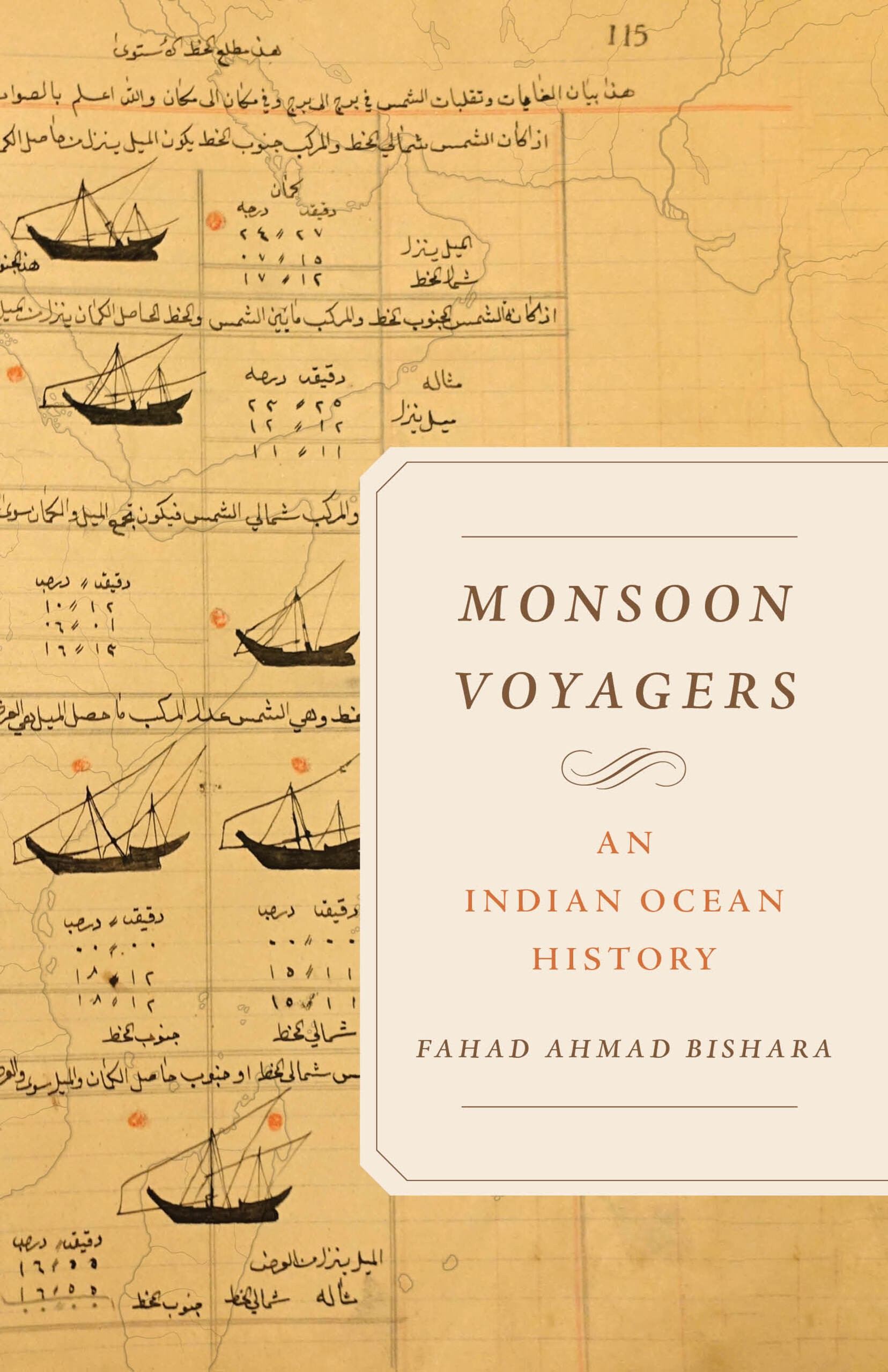
Book: Bishara, Fahad, “Monsoon Voyagers: An Indian Ocean History.” University of California, October, 2025.
Research: “Gulf Cooperation Council (GCC)— Enhancing Resilience to Global Shocks: Economic Prospects and Policy Challenges for the GCC Countries.” IMF, December 6, 2025.
Analysis: “Compute Is the New Oil: America and the Gulf Must Work Together on Artificial Intelligence.” Daniel Benaim, Foreign Affairs, December 9, 2025.
Analysis: “The Many Faces of Abu Dhabi’s Trillions.” Bloomberg, Priyanjana Bengani, Nicolas Parasie, Alex Dooler, Dinesh Nair, Demetrios Pogkas, December 7, 2025.
Analysis: “After Washington: Consolidating U.S.–Saudi Strategic Alignment.” Amnah Mosly, Gulf Research Center, December 11, 2025.
Analysis: “Beyond the End of The Line: Rethinking Saudi Arabia’s Urban Future.” Yasser Elsheshtawy, Arab Gulf States Institute in Washington, December 12, 2025.
Analysis: “Narrow Channel: Navigating Competition and Cooperation in Iraq–Kuwait Relations.” John Calabrese, Gulf International Forum, December 12, 2025.
Analysis: “The Role of E-commerce in Empowering Women in Saudi Arabia: Assessing the Policy Potential.” Hannan Hussain, Carnegie, December 5, 2025.
Analysis: “The New Gulf IPO Playbook: Sector Diversification and Growing Investor Selectivity.” Said Bakr, Arab Gulf States Institute in Washington, December 10, 2025.
Analysis: “Saudi Stocks’ Worst Year in a Decade Leaves Traders Grim on 2026.” Tugce Ozsoy, Bloomberg, December 11, 2025.
Analysis: “Is India losing clout in the Gulf?” Jean-Loup Samaan, Atlantic Council, December 9, 2025.
Podcast: “Why Did the Government Decide to Establish Royal Reserves?” host Talal Al-Harigi, Socrates Podcast, December 2, 2025. [Eng Subtitle].
Podcast: “Between Journalism, Publishing, and Diplomacy” hosting Turki Al-Dakhil, Arab Cast Podcast, December 12, 2025. [Eng Subtitle].