

Media Coverage
Geopolitics
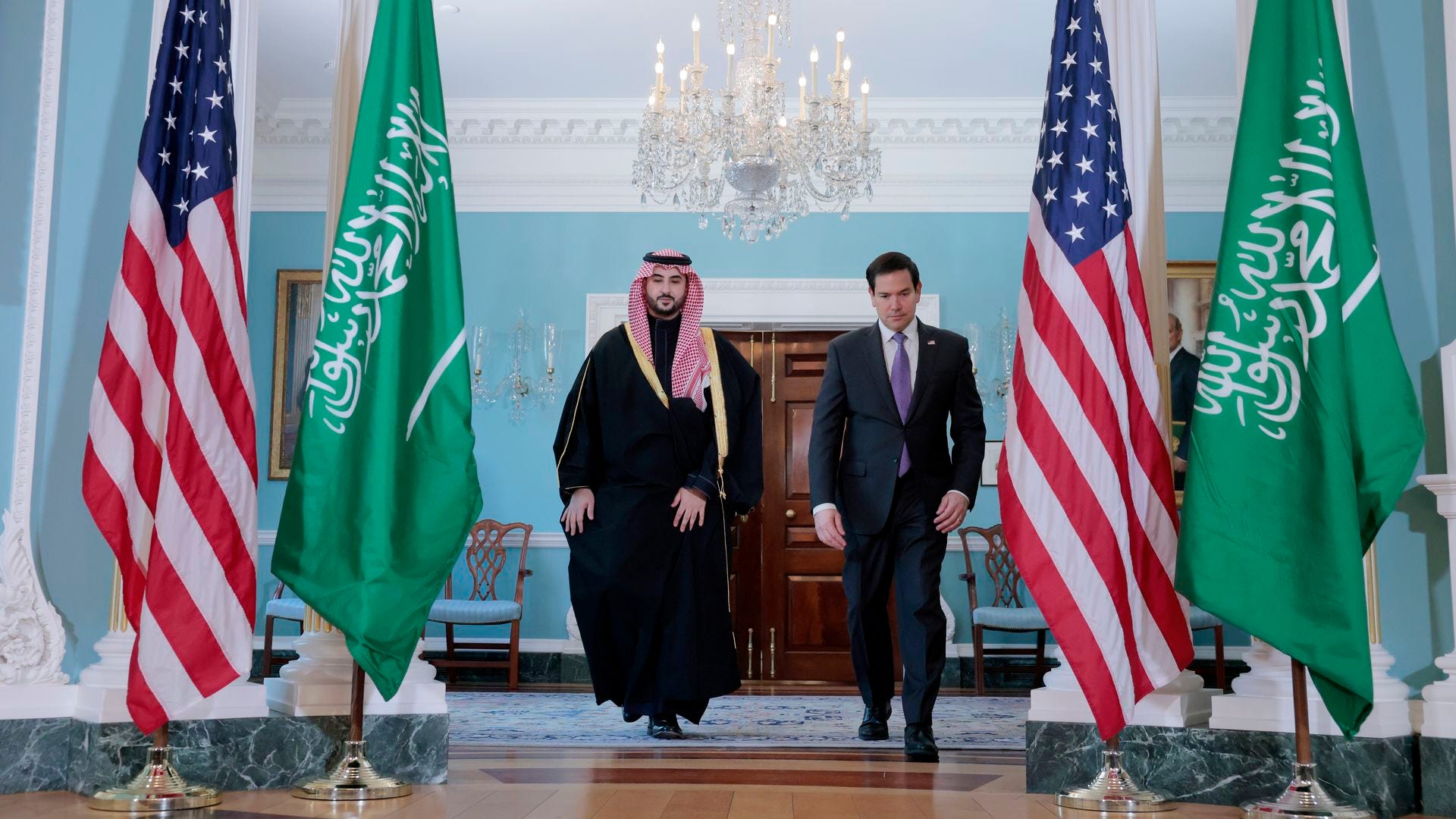
“Saudi, Israeli officials visit D.C. to talk possible U.S. strikes on Iran.” Axios, January 29, 2026.
“The Israelis came to D.C. to share intelligence on possible targets inside Iran.”
“The Saudis, meanwhile, are highly concerned about a potential regional war and are trying to help broker a diplomatic solution.”
Go Deeper: “Arab and Muslim powers mount last-ditch effort to avert US-Iran conflict.” Financial Times, January 30, 2026.
“US warship docks in Gulf of Aqaba as fears of Iran strike grow.” Middle East Eye, January 30, 2026.
“The move is part of US-Israeli military and security coordination, including reinforced naval deployment and heightened defensive and offensive readiness in anticipation of potential developments,” Kan reported, quoting a security source.
The report added that the step strengthens naval deployment, raising the level of defensive and offensive readiness in “anticipation of any possible field developments.”
“Celebrations Launch in Abu Dhabi for ‘The UAE and Kuwait Are Brothers Forever’,” Al Khaleej, January 30, 2026.
“The ‘UAE and Kuwait: Brothers Forever’ celebrations kicked off in Abu Dhabi on Thursday, as part of a comprehensive national program that will continue until February 4, 2026, across all the emirates of the country.”
“Saudi Arabian media steps up attacks on UAE as Gulf rift deepens.” Financial Times, January 21, 2026.
“Saudi journalist Jassir al-Jassir on Monday told Al Arabiya channel that the UAE ‘betrayed the partnership with the kingdom in Yemen’. He drew a contrast between the Emirati capital Abu Dhabi, which is often seen as the political centre that drives foreign policy, and its commercial hub Dubai which has been praised as an economic success story.”
Market & Economy
“Abu Dhabi folds assets worth $263bn into new wealth fund controlled by crown prince.” Financial Times, January 30, 2026.
“Greater responsibility for Sheikh Khaled within the emirate’s investment framework through L’imad echoes the establishment of the $330bn sovereign fund Mubadala, which was formed in 2002 when Sheikh Mohammed was consolidating power under his father, Sheikh Zayed.”
Go Deeper: “Shake-Up Elevates U.A.E. Crown Prince Into $260 Billion Sovereign Wealth Role.” WSJ, January 30, 2026.
“US to pay monthly Venezuela ‘budget’ from oil proceeds via Qatar fund.” Financial Times, January 29, 2026.
“Rubio said the government led by Delcy Rodríguez had been “very co-operative in this regard. In fact, they have pledged to use a substantial amount of those funds to purchase medicine and equipment directly from the United States”. One $300mn payment has already been made to Caracas “because they had to meet payroll”, he said, but about $200mn is still held in Qatar.”
“UAE launches ‘sovereign’ open AI model to counter Chinese rivals.” Financial Times, January 27, 2026.
“The Mohamed bin Zayed University of Artificial Intelligence (MBZUAI) on Tuesday released its latest model, K2 Think, alongside a complete disclosure of the data, algorithms and other code that was used to build it, as the country seeks to gain an edge in a market that has become dominated by Chinese AI groups. Eric Xing, MBZUAI president, said the state-backed university was filling a gap left by Silicon Valley firms such as Meta that have pulled back from openly publishing the research behind their AI systems.”
Go Deeper: “Can the Gulf really become an AI superpower?” Financial Times, January 01, 2026.
“Saudi Arabia opens real estate market to foreign buyers.” Arab News, January 22, 2026.
“According to the authority, the application process varies by ownership category. Foreign residents in Saudi Arabia may apply directly through the portal using their residence permit, with legal requirements verified automatically and the process completed electronically.”
Domestics
“Qatar’s Trade Balance Posts 14.1 bn Surplus in December 2025.” NPC, January 29, 2026.
“In December 2025, the total value of merchandise exports amounted to around QR 26.9 bn, reflecting a 13.7% decline compared with December 2024, yet showing a 9.9% increase from November 2025. Meanwhile, merchandise imports rose to about QR 12.8 bn in December 2025, marking a year-on-year rise of 0.6% and a month-on-month increase of 6.7%.”
Go Deeper: “Qatar’s economy records a 2.9% growth in Q3 2025 as non-hydrocarbon activities expand by 4.4%.” NPC, January 28, 2026.
“Saudi Arabia, Olympic Council Delay 2029 Asian Winter Games.” Bloomberg, January 24, 2026.
“Trojena — estimated by business intelligence platform MEED to be a $19 billion undertaking — was designed to feature ski slopes atop luxury hotel roofs in a remote area in the northwest with little natural snowfall. It was initially envisioned to be completed by 2026.”
“Difficulties creating sufficient artificial snow and constructing at high altitudes with complex topography were among factors that raised concerns about Saudi Arabia’s ability to meet required deadlines ahead of the games, people familiar said at the time.”
Go Deeper: “Saudis Scale Back Ambition for $1.5 Trillion Desert Project Neom.” Bloomberg, April 5, 2024.
“Saudi Arabia Looks to Tap Wealthy Families in New Quest for Cash.” Bloomberg, January 27, 2026.
“There are big portfolios. The wealth is sizable,” said Ayth Al Mubarak, chief executive officer of the National Center for Family Businesses in Riyadh. These entities have long dominated the Saudi economy, and close to 95% of private businesses in the kingdom are family-owned, he added.”
Go Deeper: “Saudi Arabia asks wealthy families to invest domestically as mega-projects stall: Report.” Middle East Eye, January 27, 2026.
Gulf Opinions
Following the announcement of a week celebrating Emirati–Kuwaiti relations under the slogan “UAE and Kuwait… Brothers Forever,” Gulf commentators assessed the initiative and its broader context, including its temporal overlap with Saudi–Emirati tensions. Emirati commentary largely framed the event as a natural expression of appreciation for long-standing ties with Kuwait, independent of any bilateral disagreements elsewhere in the Gulf. Noora Al Tenaiji argued that the UAE–Kuwait relationship is anchored in deep “pre-state social and commercial ties” that later evolved into sustained political alignment and strategic coordination within the GCC, positioning both states as stabilizing actors in the region. She further described Kuwait as a “trusted” political partner and a major economic pillar for the UAE, citing strong trade, mutual investment, and social integration that together underpin durable interdependence and long-term regional stability. At a broader level, Sultan Mohamed Al Nuaimi highlighted the depth of relations at the ruling-family level, noting historical ties between Kuwait’s Al Sabah family and the UAE ruling families of Al Nahyan, Al Maktoum, and Al Qasimi, a relationship he summarized as “a celebration of a shared root and a shared future, and an affirmation that the UAE and Kuwait will remain, a global model of unbreakable fraternity.”
In Kuwait, reactions were more mixed, with the discussion intersecting indirectly with sensitivities surrounding Saudi–Emirati relations. At the media level, Al Jarida published an op-ed by Emirati writer Issa Abdullah Al Zarouni, who recalled that during the formation of the UAE, Kuwait emerged as an early political and diplomatic supporter under the leadership of then Emir Sheikh Sabah Al-Salem Al-Sabah, driven by a belief in the necessity of a stable federal state in the Gulf. He emphasized that this backing was not merely “symbolic,” pointing to Kuwait opening its embassy in Abu Dhabi in 1972—only months after the UAE was declared. While many Kuwaitis welcomed and praised the initiative, some criticism also surfaced. Kuwaiti commentator Dahem Al Qahtani underscored that Kuwait and Saudi Arabia share a deeply rooted strategic partnership shaped by more than a century of political, military, and security cooperation, arguing, however, that claims suggesting Kuwaiti appreciation of Emirati–Kuwaiti relations runs counter to Saudi Arabia are “unfounded.” By contrast, Mansour Ahmed Al Muhareb cautioned against symbolism he viewed as intrusive, stating that “the Kuwaiti does not need celebration but respect for sovereignty and specificity, and does not need slogans such as ‘the Emirati is Kuwaiti,’ but rather an Emirati who does not interfere in Kuwaiti affairs or inflame tensions around its constitutional and democratic gains.” From the Saudi perspective, some commentators interpreted the episode through a more skeptical lens, with Saud Al Muqhim arguing that “Kuwait name was dragged into a dispute that does not concern it when Gargash said ‘Kuwaitis refrain’ implying that they stood within a particular political camp,” describing this as a “cheap instrumentalization” of a sovereign state and an attempt to manufacture alignments and sow divisions within the Gulf.
More Gulf Opinions
“Repression and economic collapse in Venezuela constitute crimes for which the regime should be held accountable by its own people, who have that right, or through international legal mechanisms such as the International Criminal Court or United Nations sanctions. By contrast, the act of a great power—long vocal about its ambitions toward Venezuela resources—abducting its president and his wife would amount to a form of piracy, turning the world into a jungle ruled by the strongest.”
Ahmed Al Saraf, Al Qabas, (Kuwait), January 26, 2026.
“The Qatar Investment Authority is also investing in Elon Musk xAI project, alongside investment partners including Fidelity and Nvidia, as part of a funding round valued at 20 billion dollars. These investments include data centers and artificial intelligence applications under the ‘Grok’ brand.Despite ongoing discussion about inflated valuations in artificial intelligence technology companies, the broader trajectory points to an industrial revolution driven by vast and expanding capabilities. Some commercial users of artificial intelligence may ultimately achieve greater gains than the solution providers themselves.”
Fahad Abdulrahman Badar, Al Sharq, (Qatar), January 26, 2026.
“The Peace Council promoted by Trump regarding the administration of the Gaza Strip is an unobjective process lacking credibility, particularly given the US president intent to make it a substitute for the United Nations, which he has repeatedly criticized. Against this backdrop, conditions in the Gulf region are increasingly concerning amid ongoing tensions in Yemen and the dissolution of the Arab Coalition to Support Legitimacy, both at the collective and bilateral levels. Consequently, the Yemeni crisis has become intertwined with regional tensions due to the strategic maritime corridors of Bab al-Mandab, the Gulf of Aden, and the Red Sea, and any outbreak of war between Washington and Tehran would inevitably draw the Gulf into a cycle of destruction and the closure of critical straits.”
Awadh bin Saeed Baquwair, Oman Daily, (Oman), January 27, 2026.
“The six Gulf capitals recognize that they are not in a position to support or change the regime, as the event exceeds their capacity, yet its repercussions pose serious risks to them. Should war erupt, the scenarios range from collapse and internal overthrow to the regime endurance and re-emergence with greater strength, with dangers far exceeding those of the Iraq invasion and the swift toppling of Saddam regime. If the pillars of the Tehran system collapse, a vacuum would threaten all, and if it endures, it would return more powerful.”
Abdulrahman Al Rashed, Asharq Al-Awsat, (Saudi Arabia), January 28, 2026.
Nashra Picks
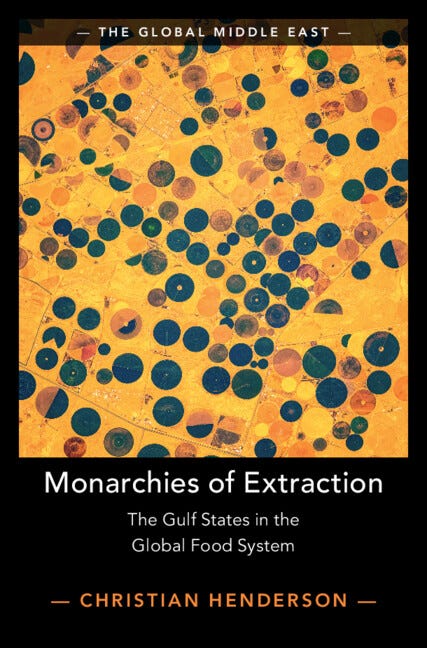
Book: Henderson, Christian, “Monarchies of Extraction: The Gulf States in the Global Food System.” Cambridge University Press, March 2026. [Forthcoming].
Research: “The Role of Urban Transformation in Saudi Arabia’s Nation-building: The Case of al-Balad, Jeddah.” Rufei Li, Arab Center for Research and Policy Studies [Doha], June 2025. [PDF].
Analysis: “Structural Reforms in Saudi Arabia Since 2016.” David Koll, Andrea Medici, Marina Mendes Tavares, Masashi Saito, IMF, January 23, 2026. [PDF].
Analysis: “A Tentative Trust: What the Barzan-EDGE Deal Reveals About Gulf Reconciliation.” David Roberts, Arab Gulf States Institute in Washington, January 27, 2026.
Analysis: “Sotheby’s returns to Saudi Arabia with art-only auction.” Rebecca Anne Proctor, Al-monitor, January 29, 2026.
Analysis: “Saudi Arabia’s Pullback Spreads, From Neom to World Cup Stadiums.” Bloomberg, Christine Burke and Mirette Magdy, January 28, 2026.
Analysis: “Saudi Arabia to scale back Neom megaproject.” Andrew England and Chris Campbell, Financial Times, January 25, 2026.
Analysis: “Saudi defense chief visits White House as Riyadh pushes against Iran strike.” Jared Szuba and Rosaleen Carroll, Al-monitor, January 29, 2026.
Analysis: “The China-Gulf Green Rush: Fueling Renewable Energy Cooperation.” Chuchu Zhang, Middle East Council on Global Affairs, January 26, 2026.
Analysis: “How the UAE Became Serbia’s Most Important Arab Partner.” Giorgio Cafiero, Arab Gulf States Institute in Washington, January 22, 2026.
Analysis: “Egypt: Partnering with Saudi Arabia on Security in the Red Sea and Gulf of Aden.” Gregory Aftandilian, Arab Center [D.C], January 27, 2026.
Analysis: “Trump’s National Security Strategy doesn’t downgrade the Middle East, it redefines it.” Kristian Alexander, Atlantic Council, January 28, 2026.
Analysis: “Saudi Arabia downsizes megaprojects, chases cash amid AI push.” Samuel Wendel and Jack Dutton, Al-monitor, January 28, 2026.
Analysis: “Rebuilding Confidence at Home: How Kuwait Can Strengthen Its Domestic Investment Climate.” Dalal Marafie, Gulf International Forum, January 29, 2026.
Analysis: “The GCC’s Evolving Trade Networks: Navigating Fragmentation and Diversification.” Frédéric Schneider, Middle East Council on Global Affairs, January 28, 2026.
Analysis: “Gulf States on the Frontline of U.S.-Iran Volatility.” Kristian Coates Ulrichsen, Arab Gulf States Institute in Washington, January 23, 2026.
Podcast: “What’s Next for Gulf Economies?” with Karen Young, MEnbar Podcast, January 28, 2026.