

Media Coverage
Geopolitics
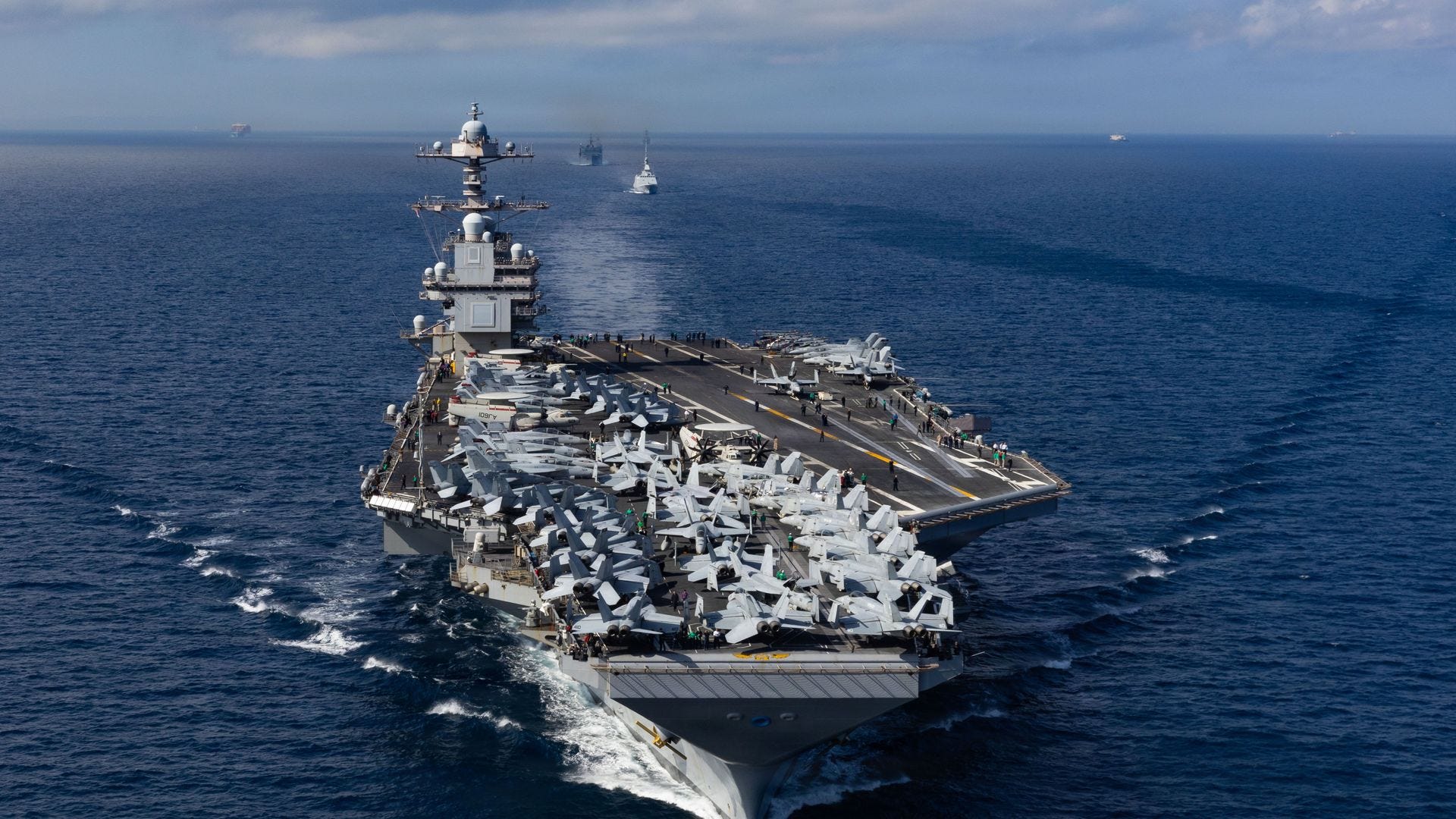
“Trump sends second aircraft carrier to Gulf amid Iran threats.” Axios, February 13, 2026.
“The move will increase the pressure on Tehran during the nuclear negotiations with the Trump administration, making the U.S. military threat even more menacing.”
Go Deeper: “America’s Military Buildup Around Iran: What We Know and What It Means.” Middle East Forum, January 28, 2026.
Market & Economy
“Saudi Firms Agree to Rebuild Syrian Aviation and Mobile Networks.” Bloomberg, February 8, 2026.
“Saudi Telecom Co. has been awarded a contract to build a 4,500 kilometer (2,796.2 miles) fiber-optic network called Silklink, it said in a filing on Sunday. The award with the Syrian Sovereign Fund was valued at 3 billion Saudi Riyal ($800 million). It also includes agreements to develop data centers and international submarine cable landing stations.”
Go Deeper: “Why is Saudi Arabia Investing in Syria?” New Lines Institute, October 2, 2025.
“Saudi PIF to unveil new 2026–2030 strategy.” Gulf Business, February 12, 2026.
“The revised roadmap for the $925bn fund will emphasise developing industry, minerals and artificial intelligence, as well as tourism, while scaling back and in some cases reconfiguring expensive real‑estate mega projects such as The Line – a futuristic mirrored city – the three people said.”
Go Deeper: “Saudi Arabia names new investment minister as Vision 2030 funding lags.” Al-Monitor, February 12, 2026.
“Abu Dhabi’s G42 Leads $1 Billion Data Center Project in Vietnam.” Bloomberg, February 8, 2026.
“The company is the primary developer of OpenAI’s Stargate infrastructure project in the UAE, part of a planned 5 gigawatt data center in the country. While much of its work is in the Gulf monarchy, G42 is pushing abroad, with data center and “smart city” projects across Africa and Asia.”
Go Deeper: “The United Arab Emirates’ AI Ambitions.” CSIS, January 24, 2025.
“GCC corporates poised for rating stability in 2026: S&P.” Arab News, February 11, 2026.
“Economic growth across the GCC is projected at 2-4 percent in 2026-27, supported by solid domestic demand, government infrastructure spending and rising hydrocarbon output.”
“Diversification efforts are gradually reducing volatility. Non-oil sectors now account for about 75 percent of GDP in the UAE and 71 percent in Saudi Arabia, while average inflation across the bloc is expected to hold steady at around 2 percent over the next two years.”
Go Deeper: “GCC Corporate And Infrastructure Outlook 2026: Stability Despite Uncertainty.” S&P Global, February 10, 2026.
“Saudi-backed Midad signs deal for sanctioned Lukoil assets.” AGBI, February 13, 2026.
“Saudi-backed Midad Energy has signed a term sheet to acquire Russia’s sanctioned Lukoil assets in a high-stakes contest against rivals including private equity giant Carlyle Group. The deal is contingent on US regulatory approval, according to three people familiar with the matter. The move highlights continued efforts by the Russian energy giant to offload overseas holdings constrained by Western sanctions.”
“Kuwait forecasts 54.7% rise in fiscal deficit as oil revenues weaken.” Arab News, February 11, 2026.
“Announcing the draft budget, Finance Minister Yaqoub Al-Refaei estimated total expected revenues at 16.3 billion dinars, marking a 10.5 percent decline compared with the previous fiscal year.”
Go Deeper: “Kuwait Budget 2026-2027” Finance Ministry, February 2026. [PDF].
“IMF urges Qatar to strengthen private sector.” AGBI, February 13, 2026.
“Qatar must step up efforts to move more citizens into the private sector by strengthening skills, small and mid-size enterprises, financing and digital adoption, International Monetary Fund officials said this week.”
Go Deeper: “IMF Staff Completes 2026 Article IV Mission to Qatar.” IMF, February 12, 2026.
“Omani Stocks Head for Best Week Since 2014 on EM Status Bid.” Bloomberg, February 12, 2026.
“Muscat’s MSX 30 benchmark has advanced more than 9% since Sunday to its highest level since 2014. Gains of nearly 20% so far this year are almost double those for MSCI Inc.’s emerging-market index.”
Go Deeper: “Beyond Oil: Accelerating Export Diversification for Sustainable Growth - Oman.” IMF, February 5, 2026.
“Iraq makes rapid progress in GCC electricity interconnection project.” Iraq News, February 11, 2026.
“The project is crucial as it seeks to enhance the country’s electricity supply by linking the transmission networks in southern Iraq to the Gulf Cooperation Council’s (GCC) electrical grid. This connection is expected to improve the stability and reliability of the electrical network.”
“The Gulf Cooperation Council Interconnection Authority (GCCIA) projected in October 2023 that the project will supply Iraq with two million megawatts in the summer and 500,000 megawatts in the winter.”
Go Deeper: “Iraq’s Electricity Shortage and the Paradox of Gas Flaring.” Baker Institute, June 17, 2025.
“Qatar Pushes Start of Its Massive LNG Expansion to End-2026.” Bloomberg, February 9, 2026.
“ConocoPhillips, a stakeholder in the project, said last week that the expansion is set to start in the second half of this year. North Field East is the first phase of Qatar’s massive expansion, which will almost double its export capacity to 142 million tons by 2030.”
Go Deeper: “How Qatar’s LNG Decisions Will Impact an Oversupplied Global Market.” Columbia University (SIPA), September 2025. [PDF].
Domestics
“Saudi investment minister among dozens in sweeping reshuffle.” AGBI, February 13, 2026.
“Saudi Arabia replaced more than 40 senior and regional government posts on Thursday, including the minister of investment and the attorney general, marking the most sweeping reshuffle since 2022.”
Go Deeper: “AlSaif’s appointment reflects urgent Saudi need for FDI.” AGBI, February 13, 2026.
“Dubai-based DP World replaces chief named in Epstein files.” AlJazeera, February 13, 2026.
“The friendly exchanges between the two include discussions about deals and also mention bin Sulayem visiting Epstein’s private island while sharing contacts in business and politics.”
“The two men also shared salacious comments about women, with bin Sulayem’s email address featuring a correspondence in which Epstein remarked, “I loved the torture video.”.”
Go Deeper: “Newly surfaced Epstein email ties him to Israel–UAE strategy targeting Qatar.” Middle East Monitor, February 3, 2026.
Gulf Opinions
This week Gulf commentators devoted significant attention to the Jeffrey Epstein leaks, particularly as some disclosures were said to intersect with figures from the region. From Saudi Arabia, Hailah Abdullah Almushaweh argued that in a system where the rule of law is meant to be a “red line,” the Epstein files demonstrated how immense wealth, once liberated from ethical and legal restraint, can redirect justice toward “power and pleasure” rather than principle. In her reading, the greater scandal was not confined to the criminal acts themselves but lay in the permissive architecture that granted a form of “informal immunity,” transforming justice from an absolute norm into a selective calculation. From Kuwait, Saadiah Mufarreh expanded the critique, asserting that the West—often presenting itself as a moral “guardian” and measuring others by strict democratic standards—appeared more invested in managing its “narrative” than in safeguarding victims reduced to statistics and procedural footnotes. The episode, she argued, exposed uncomfortable “double standards,” as transparency receded when scrutiny turned inward. Similarly, Hussain Al Rawi invoked John Rawls critique of “unequal systems,” warning that when elites design structures that insulate their own privilege, accountability becomes conditional: the weak face consequences, while the powerful are shielded. Qatar’s Jawaher Al Thani reinforced this theme, observing that despite hundreds of names circulating in messages, photographs, and testimonies, only two individuals were imprisoned—Epstein, who died in “suspicious” circumstances, and Ghislaine Maxwell—while alleged abusers were reportedly redacted and victims exposed, prompting the blunt question of whether justice is designed to protect the powerful or the vulnerable.
From Oman, Muammar bin Ali al-Tubi offered a more controversial geopolitical interpretation, arguing that recently released materials contain what he described as indications of a connection between Epstein and Israeli intelligence, citing reported contacts with former defense minister Ehud Barak and framing the affair within a broader narrative of “managed chaos” in parts of the Arab world, including Egypt, Libya, Lebanon, and Syria. He situated these claims within a wider argument that networks of influence operate through leverage, blackmail, and the moral compromise of decision makers, portraying Epstein’s use of intermediaries, carefully curated invitations, and concealed surveillance systems as resembling intelligence-style tradecraft designed to secure influence over political and financial elites. In the United Arab Emirates, where some leaks were also said to reference Emirati names, Dhahi Khalfan wrote on X that “the real blackmail lies in the three million documents that have not been released,” suggesting that the material already published constitutes only a “prelude.” He further questioned how Epstein could acquire a private island, host heads of state, and sustain such operations without the awareness of security agencies, concluding that the entire episode appears to target “something far more significant” than the crimes alone, thereby deepening regional skepticism toward the official narrative.
Nashra Picks
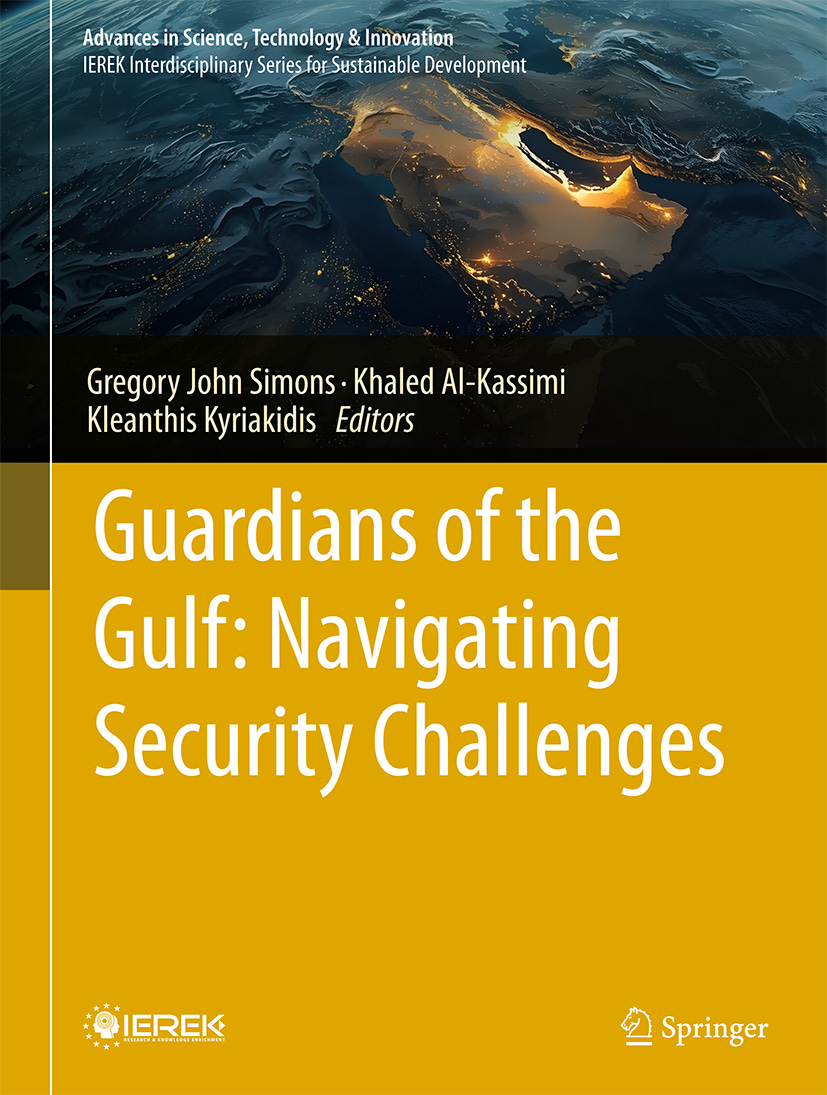
Book: Edited by Gregory John Simons, Khaled Al-Kassimi, Kleanthis Kyriakidis “Guardians of the Gulf: Navigating Security Challenges.” Springer, May 2026.
Research: “Activism and Community-Based Climate Adaptation in Kuwait.” Mariam AlSaad, The Middle East Journal, 2026.
Research: “The GCC’s Economic Diplomacy in a Multi-Polar World.” Christopher M. Davidson , The Middle East Journal, 2026.
Research: “How to Upgrade US-Saudi Defense Relations.” Bilal Y. Saab, The Middle East Journal, 2026.
Analysis: “Mixed signals from the new Q3 2025 labor market data.” Meshaal Alkhowaiter, Saudi Labor Pulse, January 1, 2026.
Analysis: “From Exchange to Strategy: Making Culture a Pillar of EU-GCC Relations.” Alice Königstetter, The Euro-Gulf Information Center, January 30, 2026.
Analysis: “The $108 Oil War: Can the Middle East Crash the World Economy?” Dina Esfandiary and Ziad Daoud, Bloomberg, February 10, 2026.
Analysis: “Why Saudis feel squeezed even as the economy booms.” The Economist, February 10, 2026.
Analysis: “What’s behind Saudi outreach to Ethiopia amid UAE rift?” Rosaleen Carroll, Al-Monitor, February 13, 2026.
Analysis: “Reassessing Saudization: Localisation and Labour Market Nationalisation in Saudi Arabia.” Swapnil Sujal, Middle East Political and Economic Institute, February 2, 2026.
Analysis: “The Multipolar Trap in the New Middle East: How Gulf States Are Learning to Hedge in an Uncertain World Order.” Rabbab A. Khan, Middle East Political and Economic Institute, January 20, 2026.
Analysis: “Oman’s Space Ambitions: A Pragmatic Gulf Model” Raymond Karam, Arab Gulf States Institute in Washington, February 11, 2026.
Analysis: “The Gulf’s Green Rush: Financing the Future, or Just Repainting It?” Christopher Gooding, Arab Gulf States Institute in Washington, February 10, 2026.
Analysis: “Regional States Test the Economic Waters in Syria.” Said Bakr, Arab Gulf States Institute in Washington, February 11, 2026.
Podcast: “Has the Gulf Cooperation Council’s relevance expired?” with Saad Al-Ghanim, Arab Cast, February 14, 2026.
Seminar: “Beyond Tariffs: The New India–Gulf Economic Playbook.” ORF, Feb 7, 2026.