

Media Coverage
Geopolitics
“Gulf countries condemn ‘Iranian’ attacks on UAE, Qatar, Bahrain, Kuwait, Jordan.” Middle East Monitor, February 28, 2026.
“In a statement, the Saudi Foreign Ministry said the kingdom “condemns and denounces in the strongest terms the blatant Iranian aggression and the flagrant violation of the sovereignty” of the United Arab Emirates, Bahrain, Qatar, Kuwait, and Jordan.”
Go Deeper: “U.S. and Israel Strike Iran, Tehran Retaliates: Live Updates.” WSJ, February 28, 2026.
“US‑Iran war: More than 260 flights cancelled across UAE, GCC and other countries today and tomorrow.” Alkhaleej News, February 28, 2026.
“According to data shared by global aviation analytics company Cirium, 3,422 flights were scheduled to arrive, with the majority of them in Saudi Arabia (1,277), the UAE (1,067), Qatar (335), Iran (307), Oman (122), Israel (107), Jordan (105) and Bahrain (102) by 3pm from different countries.”
“Mediator Oman urges US to pull back from Iran conflict.” Al Arabiya, February 28, 2026.
“Oman’s foreign minister, who had been mediating US-Iran talks, lamented on Saturday a wave of US and Israeli attacks on the Islamic Republic, and urged Washington to avoid getting “sucked in further” into a war that is not theirs.”
“‘I am dismayed. Active and serious negotiations have yet again been undermined,” Badr Albusaidi said in a statement on X.”
Go Deeper: “Analysis-Trump’s Iran strikes mark his biggest foreign policy gamble.” Al-Monitor, Matt Spetalnick, Andrea Shalal and Idrees Ali, February 28, 2026.
Markets, Economies, and Domestics
“IMF: Kuwait Real GDP Will Expand by 3.8% in 2026.” Asharq Al-awsat, February 28, 2026.
“Barclays boosted its Brent crude oil futures price forecast to around $100 per barrel on Saturday, up from $80 on Friday, after the United States and Israel bombed several sites in Iran. Oil markets might have to face their worst fears on Monday. As things stand right now, we think Brent could hit $100 (per barrel), as the market grapples with the threat of a potential supply disruption amid a spiraling security situation in the Middle East,” the bank said in a report.”
Go Deeper: “IMF Executive Board Concludes 2025 Article IV Consultation with Kuwait.” International Monetary Fund, February 23, 2026.
“Fitch Downgrades Bahrain to ‘B’ on Rising Debt and Wider Deficits” Al Alarabiya, February 23, 2026.
“Late last year, Bahrain announced fiscal reforms including higher fuel prices and tariffs on electricity and water to bolster public finances. The agency maintained the kingdom’s outlook at “stable.” Peer agency S&P also downgraded the kingdom’s sovereign credit rating to “B” in late November last year.”
Go Deeper: “Fitch Downgrades Bahrain to ‘B’; Outlook Stable.” Fitch, February 23, 2026.
“Oman’s non-oil exports rise 7.5% as diversification gains traction.” Arab News, February 22, 2026.
“Oman’s non-oil exports rose 7.5 percent to 6.7 billion Omani rials ($17.4 billion) in 2025, highlighting diversification gains even as lower crude prices dragged overall export earnings lower.”
“Data from the National Centre for Statistics and Information showed re-export activity grew faster, increasing 20.3 percent year on year to 2.05 billion rials, supported by stronger trade flows through the Sultanate’s ports and logistics hubs.”
Go Deeper: “Fiscal Performance [Third Quarter 2025]: A Quarterly Bulletin Issued by the Ministry of Finance.” Oman Ministry of Finance, 2025, [PDF].
“JPMorgan Says UAE Is Too Rich to Be an Emerging Market.” Bloomberg, February 24, 2026.
“JPMorgan Chase & Co. said it will remove the United Arab Emirates from its emerging-market bond indexes by June after the Middle Eastern nation exceeded the bank’s measures of wealth for three successive years.”
Go Deeper: “JPMorgan to drop UAE from emerging market bond indexes: What to know.” Al-Monitor, February 25, 2026.
“Oman special zones investment rises 6.8% to $3.6bn.” Arab News, February 16, 2026.
“The figure raises the total committed investment under the supervision of the Public Authority for Special Economic Zones and Free Zones, known as OPAZ, to 22.4 billion rials, the Oman News Agency reported.”
Go Deeper: “Reforms drive RO 30 billion FDI surge in Oman.” Oman Observer, February 28, 2026.
“UAE announces petrol and diesel prices for March 2026.” Gulf News, February 28, 2026.
“Under the new rates, Super 98 petrol will cost Dh2.59 per litre, up from Dh2.45 in February, while Special 95 petrol is priced at Dh2.48 per litre, compared to Dh2.33 last month.”
Go Deeper: “Will UAE petrol prices drop in March 2026?.” Time Out, February 26, 2026.
Gulf Opinions
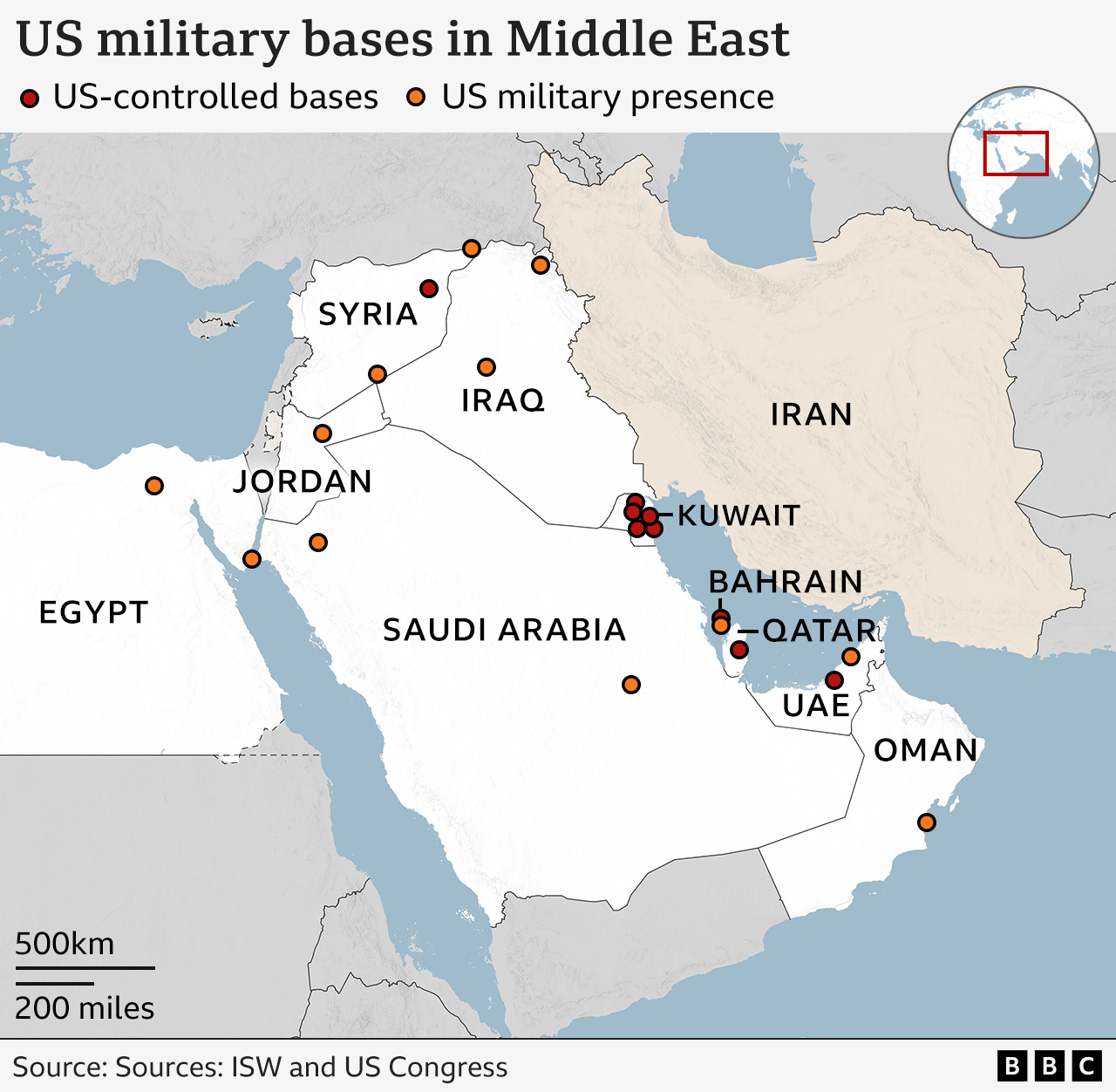
The US-Israeli attack on Iran, including the reported targeting of Iranian Supreme Leader Ayatollah Ali Khamenei, dominated social media discussions across the Gulf, particularly after Iran retaliated by striking five Gulf states in response to the US assault. Omani commentator Hatim Al Tai described the confrontation as a strategic miscalculation by Washington, arguing that the United States committed a “grave mistake” and entered a trap whose consequences remain uncertain. He maintained that the escalation is not merely an American campaign against Iran, but a broader project shaped by Israeli priorities. As he stated, “This is not simply an American war against Iran; it is Zionism’s war against the last state that openly opposes the Israeli occupation — a ‘last opportunity’ war for Israel to dominate the region, control its states, advance a colonial and violent agenda, and revive the idea of Greater Israel.” Similarly, Qatari poet and political opponent living in exile Mohamed Ibn Altheeb argued that “Iran is a Muslim country and a neighbor; it has its rights and it has its faults. However, for the United States to bomb it solely for the sake of Netanyahu’s interests, without any consideration for the interests of the Arabs and the Gulf, and from bases located within the Gulf itself, represents the height of recklessness, contempt, and manipulation in international relations.”
From another perspective, Kuwaiti commentator Ayed Al Manna argued that Iran acted recklessly by targeting most Gulf Cooperation Council states without justification, emphasizing that the presence of American bases does not legitimize violating their sovereignty, especially since no hostile action against Iran originated from those territories. He noted that the strikes extended to civilian and purely national sites such as Kuwait International Airport, as well as Kuwaiti military locations with no American presence, and asserted that even targeting American bases on Gulf soil constitutes a breach of the sovereignty of the host states and warrants a firm response. Saudi expert Hesham Alghannam focused on the broader regional security dimension, arguing that “Israel may be capable of achieving military decisiveness in the short term, but without political solutions every victory remains temporary. The United States, far stronger than Israel militarily and technologically, did not secure lasting victories in Vietnam, Iraq, or Afghanistan; Israel is not an exception in history — it is vulnerable to attrition and prolonged wars.” Connecting the developments to Yemen, UAE commentator Hani Mas’hour expressed hope that Yemenis would also “rejoice at the death of Abdulmalik al-Houthi,” while linking the confrontation to southern Yemen, which the UAE has supported and which, as he argued, did not fall under Iranian influence. He wrote, “Baghdad, Damascus, Beirut, and Sanaa are capitals that fell — except for Aden, which stood firm thanks to the intervention of the sons of Zayed.” Meanwhile, his veteran compatriot Abdulkhaleq Abdullah characterized the Saudi Crown Prince Mohammed bin Salman’s phone call to UAE President Mohamed bin Zayed — made in response to the Iranian attacks on the Gulf states — as “the most joyful news of the day.”
More Gulf Opinions
“The most prominent hallmark of the UAE development trajectory is its ranking among the world top ten countries in the Global Soft Power Index, which covered 193 states, with the UAE placing tenth globally.”
“Soft power is not a fixed destination to be achieved, but a continuous process. The UAE has worked to update its policies, measure the performance of its institutions, develop its human capital, and consistently link achievement with humanitarian values, thereby transforming this form of power into a lasting asset that can be built upon and does not diminish.”
Noora Al-Tunaiji, Al Etihad, (UAE), February 27, 2026.
“For decades, the Khor Abdullah file has been reopened whenever political calculations tighten in Baghdad, as if historical facts and international decisions could be erased by a hasty ruling or a populist speech. Between one judicial verdict and another, and between political slogans and military imagery, it is the international and historical documents that remain the decisive reference, unchanged by shifting agendas.”
Hussain Al Rawi [Kuwait], Al Roya, (Oman), February 26, 2026.
“The impact of regional wars on the Sultanate of Oman is marked by a clear duality: potential short-term financial gains resulting from rising oil prices, contrasted with longer-term strategic and economic risks. Accordingly, a prudent reading of the national interest suggests that regional stability remains the option most consistent with the Sultanate priorities for development and security, compared to any temporary gains that may arise from geopolitical crises.”
Sultan bin Salem Al Issai, Al Roya, (Oman), February 24, 2026.
“Today, the southern [Yemeni] issue returns once again to the arena of political debate, but this time it assumes a regional and international dimension. While this carries political significance, it also entails considerable risk, as external intervention coincides with a period of deep fragmentation and division among southerners. Consequently, any foreign involvement is likely to pursue its own interests without regard for the broader interests of the southern population. Any weakening of national cohesion and division of the South into multiple states, as was the case during the British colonial period, would ultimately serve the interests of those external powers — particularly states seeking to establish a foothold in the southern Arabian Peninsula in order to exert control over the wider region.”
Zaid Al Fadheel, Makkah, (Saudi Arabia), February 23, 2026.
“At the global level, the decision restores credibility to the rules-based trading system. However, Trump immediate recourse to ‘Section 122’ to impose an alternative 15 percent tariff means that we have shifted from ‘emergency chaos’ to ‘temporary protectionism’ under a timeline not exceeding 150 days, placing global trade in a state of constant anticipation.”
Adnan Yousef, Akhbar Al Khaleej, (Bahrain), February 23, 2026.
Nashra Picks
Book: Mays, Terry M., “The Establishment of the Arab League Security Force, 1961–63: Peacekeeping in Kuwait.” Springer, 2025.
Analysis: “Asia liquefied petroleum gas prices spike after damage to Saudi facility.” Jack Dutton, Al-Monitor, February 26, 2026.
Analysis: “JPMorgan to drop UAE from emerging market bond indexes: What to know.” Jack Dutton, Al-Monitor, February 25, 2026.
Analysis: “Demographics Mean That Job Creation Is Top of the Saudi Economic Policy Agenda.” Tim Callen, Arab Gulf States Institute in Washington, February 25, 2026.
Analysis: “Beyond the Cube: Rethinking Urban Ambition in Riyadh.” Yasser Elsheshtawy, Arab Gulf States Institute in Washington, February 24, 2026.
Analysis: “AI, the Gulf, and the US: A Primer.” Mohammed Soliman, Middle East Institute, February 26, 2026.
Analysis: “JPMorgan to drop UAE from emerging market bond indexes: What to know.” Jack Dutton, Al-Monitor, February 25, 2026.
Analysis: “Demographics Mean That Job Creation Is Top of the Saudi Economic Policy Agenda.” Tim Callen, Arab Gulf States Institute in Washington, February 25, 2026.
Analysis: “Are Qatar and Saudi Arabia Reassessing Their Reliance on the US?” Annelle Sheline, Quincy, February 26, 2026.[PDF].
Analysis: “To harness Saudi Arabia’s demographic dividend, Riyadh must invest in human capital.” Khalid Azim, Atlantic Council, February 25, 2026.
Analysis: “Riyadh takes the helm in Yemen.” Eleonora Ardemagni, Middle East Institute, February 25, 2026.
Analysis: “Hearing Them Softly: Emirati Discourse Management Works the Rift.” William Roebuck, Arab Gulf States Institute in Washington, February 23, 2026.
Analysis: “Can the Gulf Cooperation Council Transcend Its Divisions?” Hesham Alghannam, Carnegie, February 25, 2026.
Analysis: “Saudi Arabia Confronts the Israel–UAE Alignment in Somalia.” Giorgio Cafiero, Arab Center [DC], February 25, 2026.
Analysis: “The state of great power competition in the Gulf.” Jonathan Fulton, Atlantic Council, February 20, 2026. [PDF].
Analysis: “Gulf Energy Transition Through Renewable Energy Development.” Salem Alhajraf, Baker Institute, February 26, 2026. [PDF
Analysis: “Gas and Oil Pipelines in the Middle East Merits and Demerits.” Naji Abi-Aad, Gulf Research Center, February 25, 2026.
Podcast: “Who is driving the U.S. political landscape?” with Lara Trump, Arab Cast, February 27, 2026.
Interview: “The Tucker Carlson story.” Al-Liwan, February 20, 2026.