

Media Coverage
🇸🇦 Saudi Arabia
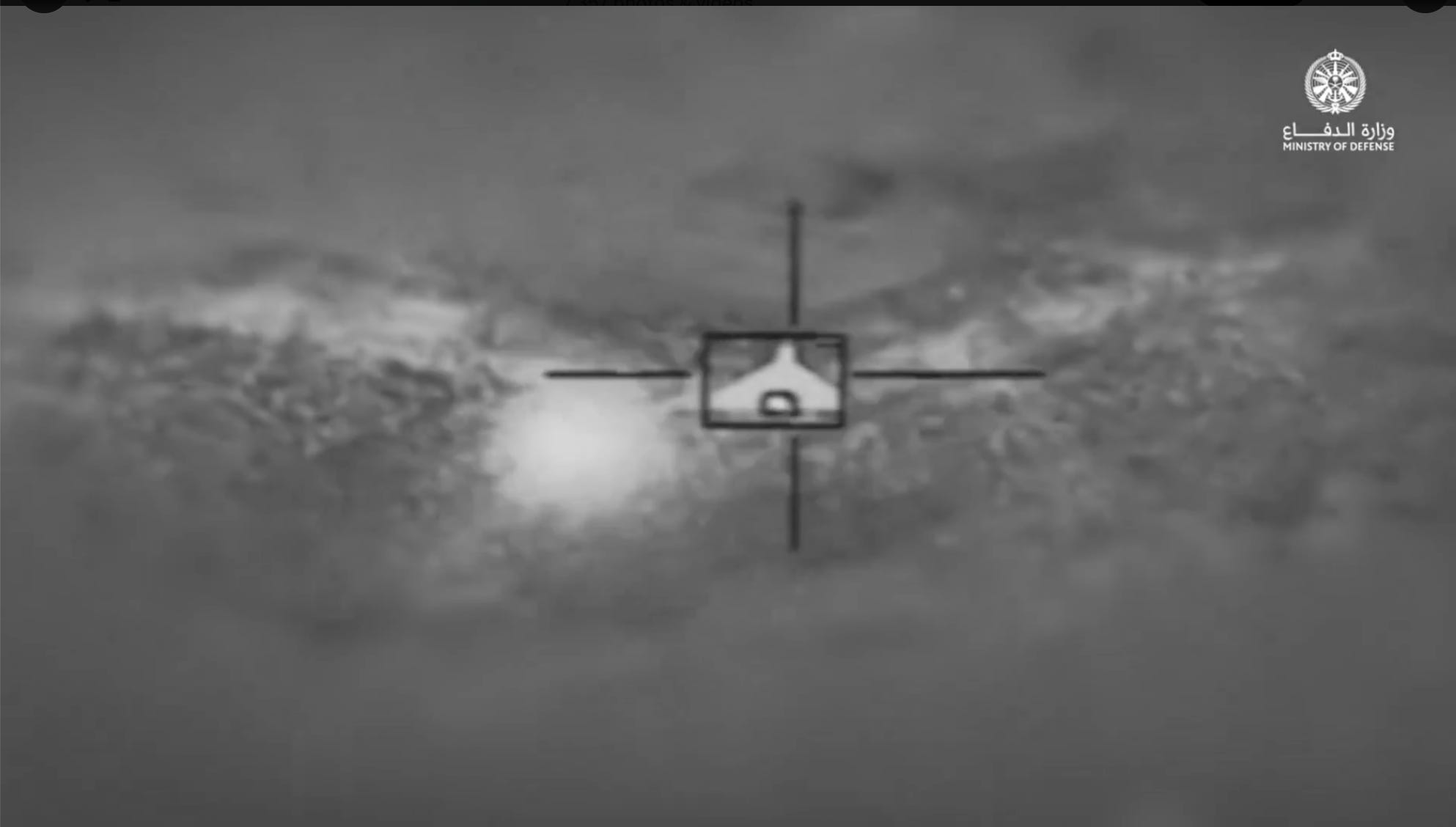
“Saudi Arabia Targeted with 50 Drones Within Hours as Iran Launches New Wave of Attacks on Gulf.” The National, March 13, 2026.
“Saudi Aramco says claims it is in talks with Ukrainian firms for drones inaccurate.” Reuters, March 12, 2026.
“Five US Air Force Refuelling Planes Damaged in Iranian Missile Attack on Prince Sultan Air Base.” The Wall Street Journal, March 14, 2026.
Saudi GDP Grew 4.5% in 2025, Driven by Oil and Non-Oil Sector Gains.” Arab News, March 09, 2026.
🇦🇪 UAE
“UAE’s Key Oil Hub Suspends Loadings After Drone Attack, Fire.” Bloomberg, March 14, 2026.
“FAB shareholders approve record Dh8.84b dividend after profit surges 24%.” Khaleej News, March 11, 2026.
🇶🇦 Qatar
“Qatar Says It’s Evacuating Several Areas Due to Iranian Attacks.” The Wall Street Journal, March 14, 2026.
“Qatar says water reserves sufficient for 4 months, food reserves for 18 months.” Khaleej Times, March 14, 2026.
🇰🇼 Kuwait
“Kuwait National Guard destroys drone warhead remnants from fuel tank in 7-day operation.” Khaleej News, March 14, 2026.
🇧🇭 Bahrain
“U.S.-Made Launcher Fired Missiles From Bahrain Toward Iran, Video Shows - The New York Times.” The New York Times, March 13, 2026.
“F1 races in Bahrain, Saudi ‘cancelled or postponed’.” The New Arab, March 14, 2026.
Gulf Opinions
This week, amid escalating regional tensions linked to the ongoing confrontation involving Iran, the United States, and Israel, Gulf commentators increasingly turned their attention to a broader strategic question: the need for a dedicated Gulf security framework. Several voices argued for establishing a Gulf security system capable of coordinating defense and crisis management across the region. Across the Gulf commentary space, the debate is converging around a central idea: Gulf security can no longer remain reactive or dependent on external arrangements but must evolve into an institutionalized regional system.
“In every major crisis that shakes the Gulf, the same words return: unity of destiny and the need for coordination,” writes Kuwaiti commentator Abdulaziz Mohammed Al-Anjari, warning that Gulf states still treat threats as temporary shocks rather than as a long-term challenge requiring institutions and strategic preparation. Repeated crises, he argues, reveal a persistent gap: the region may possess a Gulf Cooperation Council framework, but it still lacks a genuine Gulf security system capable of collective action. Without building such a structure before crises erupt, he cautions, Gulf unity will remain little more than “temporary truces between separate policies.”
A similar concern appears in the analysis of Kuwaiti professor of Sharia and Islamic studies Abdul Hamid Al-Shaiji, who frames the issue within a broader international context. Asking “Where does the Gulf stand in this moment of regional fluidity—does it remain an observer or move into a position of initiative?”, Al-Shaiji argues that the GCC can become a collective stabilizing power in the international system rather than a passive bystander. To achieve this, he outlines four strategic paths: strengthening internal cohesion, advancing collective security coordination, diversifying international partnerships without dependency, and actively shaping regional balance rather than merely adapting to its outcomes.
Other commentators focus on the structural foundations required to sustain such a transformation. Oman commentator Ali Al-Kathiri argues that Gulf security cannot rely on shifting alliances built on temporary interests but must instead rest on what he calls “an independent Gulf security doctrine.” This vision would move beyond symbolic coordination toward a unified Gulf military structure with a shared doctrine, joint command, and integrated intelligence and armament systems, ensuring that regional security is built within the Gulf itself rather than outsourced to external powers. From a complementary perspective, Saudi writer Shaher Al Nahari stresses that growing regional “uncertainty” means Gulf states can no longer assume the “political and economic stability” they enjoyed for decades will continue. He therefore calls for a deeper strategic vision centered on stronger defense capabilities, domestic military industries, and modernized armed forces.
Former Qatar Prime Minister Hamad bin Jassim Al Thani framed the current war as a strategic wake-up call for Gulf states. He argues that the conflict underscores the urgent need to establish a real and operational GCC security alliance. Writing on Twitter, he calls for the creation of a Gulf military and security pact “similar to NATO,” with Saudi Arabia playing a leading role, and insists preparations should begin immediately rather than waiting for the war to end. He also urges GCC states to overcome internal differences and prioritize collective Gulf interests in order to build coordinated military and electronic defense industries capable of deterrence and self-protection. Without such a framework, he warns, the Gulf risks remaining a frontline for wars it neither starts nor controls.
More Gulf Opinions
“It can be said that the similarity between Marxism, late Marxism, some currents of political Islam, and the experience of Wilayat al-Faqih lies not in their intellectual content as much as in the mental mechanism through which ideas are treated, and the political structures that emerge from them. In all three cases, an idea that arose within a specific historical context is treated as a universal truth valid for all times and places. When circumstances change, the idea does not evolve at the same pace, producing tension between theory and reality. Societies that advance are not those that abandon their intellectual or spiritual heritage, but those that place ideas within their historical context. An idea, after all, is a human attempt to understand the world, not a sacred text existing outside time. When thought turns into a closed doctrine, it loses its ability to adapt to reality and becomes a burden on societies rather than a tool for understanding them.”
Mohammed Alrumaihi [Kuwait], Asharq Al Awsat, (Saudi Arabia), March 14, 2026.
“If the Iranian regime survives the current war, it is unlikely that the region will return to the pre-war status quo. Instead, we may face a regime that emerges harsher, less confident, and more inclined to rebuild its legitimacy through security and power rather than openness. Recent reports suggest that the Revolutionary Guard has tightened its grip over decision-making during the war, while even Israel does not appear certain that the conflict will bring down the regime. At the same time, there are still no clear signs of an organized uprising capable of toppling it from within.”
Ebtisam Al Kitbi, X, (UAE), March 13, 2026.
“The Arab world today stands before this crossroads with unprecedented clarity. Either the Arab League redefines and activates its role as a genuine instrument for shaping a shared strategic will that protects its members and deters those who attack them, or the regional reality will impose new forms of coordination and cooperation that move beyond the framework created eight decades ago.”
Abdullah Khalifa, Al Etihad, (UAE), March 12, 2026.
“Most Arab states may have erred in their military planning by leaning almost entirely on the United States as a strategic ally in the event of conflicts or wars in the region, as seen in the war against Iran. Yet it has become clear that the purpose of American bases in the region is primarily to serve the interests of Washington and the Zionist entity; despite the defensive systems at these bases, they were not activated.”
Hameed bin Mohammed Al Busaidi, Oman Daily, (Oman), March 11, 2026.
“Russia appears to be the biggest economic beneficiary of the crisis [the Iranian war]. It was notable that Washington granted India a thirty-day grace period to continue importing Russian oil, while Moscow no longer needs to offer discounts on its crude. Russia has also emerged as an ideal alternative through export routes passing via the Baltic Sea, the Arctic, and the Black Sea. If the conflict with Iran is considered alongside developments in Venezuela, the situation becomes almost ideal for Russia—at least in the short and medium term. As a twist on Al-Mutanabbi famous verse: ‘The misfortunes of some people become the gains of others.’”
Abdulrahman Altrairi, Okaz, (Saudi Arabia), March 9, 2026.
“The regional landscape is not without attempts by some actors to exploit existing tensions to achieve political and strategic objectives. Among these actors is the Israeli government led by Benjamin Netanyahu, which sees the escalating confrontation with Iran as an opportunity to rearrange regional alliances in a way that serves its security and political vision.”
Ibrahim Flamurzi, Al Sharq, (Qatar), March 9, 2026.
Nashra Picks
Analysis: “Cultural life in Saudi Arabia navigates war.” Rebecca Anne Proctor, Al-Monitor, March 13, 2026.
Analysis: “Shockwaves Across the Gulf.” Angie Omar, Carnegie, March 12, 2026.
Analysis: “Stress-Test the Vital Hormuz-Malacca Artery Before It Breaks.” Gopi Bhamidipati, Middle East Institute (NUS), March 5, 2026.
Analysis: “Why Gulf security is critical to global security.” Omran Al-Kuwari, Atlantic Council, March 12, 2026.
Analysis: “Airlines gradually restore Middle East flights, Gulf still heavily grounded.” Jack Dutton, Al-Monitor, March 10, 2026.
Analysis: “Building A Heat Resilience Roadmap for the Gulf Region.” Leigh Mante, ORF, March 13, 2026.
Analysis: “China’s Middle East Ties Go Far Beyond Iran.” Henry Tugendhat, The Washington Institute, March 10, 2026
Analysis: “Strategic Consequences of the U.S.–Israel War with Iran.” Patrick Theros, Gulf International Forum, March 11, 2026.
Analysis: “Slow Depletion of Big Reserves Exposes Kuwait to Oil Demand Risks.” Kristian Coates Ulrichsen, Jim Krane, Mira Kadapurath, and Irini Linardos, Baker Institute, March 11, 2026.
Analysis: “The Limits of Neutrality for Gulf States in the U.S.–Israel–Iran War.” Khalid Al-Jaber, Middle East Council on Global Affairs, March 12, 2026.
Analysis: “Energy under attack: What the Gulf can learn from Ukraine and Iraq.” Matthew Keating, Atlantic Council, March 12, 2026.
Analysis: “The Gulf in the Line of Fire: The Calculations and Contradictions of Iranian Strategy.” Arab Center (D.C), March 9, 2026.
Analysis: “Gulf States Play Defense.” Kristin Smith Diwan, AGSI, March 11, 2026.
Analysis: “How Russia Benefits from Oil Disruption in the Gulf.” Noam Raydan and Anna Borshchevskaya, The Washington Institute, March 11, 2026.
Podcast: “How the Iran War Came to the Gulf.” Hosting Dina Esfandiary and Sultan Alamer, The Lede, March 9, 2026.
Podcast: “Who Has Sovereignty Over U.S. Bases in the Gulf?” Hosting Habib Al-Mulla, Arab Cast, March 13, 2026. [Eng Substitle].